Local Independent Food Producers

February 5, 2026

A smiling woman holds two full cartons of ripe Tayberries for sale in front of the Compost Education Centre farm stand.

Now more than ever it is important that we support local and independently owned food producers on the South Island. We made a list of some stores you can support. We are so fortunate to live somewhere with lots of local food producers and a mild climate that allows us to grow year-round!

Local & Independent Grocers

  • Zero Waste Emporium
  • The General Store
  • Fernwood General Store
  • Fairway Markets
  • Urban Grocer
  • The Market Stores
  • Red Barn Market
  • Masala Mart
  • Damascus Food Market
  • Lifestyles Market
  • Old Farm Market
  • Mexican House of Spice
  • The Market Garden
  • …and many more!

Local Grocery Boxes

  • South Island Farm Hub
  • BCause Grocery Boxes
  • Good Food Box

Buy Farm Direct

Sign up for a CSA box with a local farm or buy from them at a farmers’ market. Find local farms at islandfarmfresh.com

Do-it-yourself

Did you know that you can grow your own food year-round on the South Island? Learn where to start with a gardening workshop at the Compost Education Centre. Get Growing Victoria! distributes free seedlings in the spring and summer. Learn about growing and caring for fruit trees with Lifecycles.

You are not alone.

No matter how you choose to start supporting local, independent food producers, remember that we are all in it together. The more of us who support local producers, the strong our food system will be in the future. Start small and go from there.

Posted in Announcement, Blog, Civic Engagement, Food Security

The Good Food Gathering

December 18, 2025


Here at the Compost Education Centre, we see composting as essential for the cultivation of good food. Yet compost is just one ingredient in the recipe for good food – we also need growers, distributors, chefs, teachers, elders, researchers, and youth.

On November 27th, I was grateful to be able to attend the 10th Annual Good Food Gathering (GFG), where I was able to learn about the work of many folks involved in these various roles throughout the Capital Region District. The Good Food Network exists to support and connect us, which is facilitated by CRFAIR.

As a relative newcomer to the “food system” scene, I was particularly excited for this event. As I stepped into the spacious upper hall of the Gorge Pavillion, with a beautiful view of the Gorge waterway, the room was abuzz with reunions, new connections, fruitful discussions – and of course, delicious food. Though I was feeling a bit shy in this busy room, throughout the day many people introduced themselves to me and made me feel welcome and shared a bit about their work with me.

The day began with an overview of the current context surrounding food systems – how recent years have seen skyrocketing grocery prices but stagnating farmer incomes and increasing food insecurity, especially among equity-denied groups. Despite these growing concerns, many folks have made large strides in our region’s food system over the past 10 years, from Flourish!’s school food programs to Pauquachin First Nation’s clam garden restoration to the development of regional FoodHubs, there is much to celebrate.

After this (and my favourite part of the day), 10 individuals shared stories about their work, their successes and challenges. During these stories, I was especially excited by the work of Ariel at Iyé Creative, where they have done significant research into increasing community capacity to grow culturally relevant food crops. Importantly, a key learning from the Good Food Gathering was that we still have a lot of work to do in our region around supporting the cultivation of cultural foods and prioritizing Indigenous food systems. For those of us engaged (or wanting to engage!) with our local food systems, it is of the utmost importance that we envision food that feeds not only our bodies, but our minds and spirits, and serve everyone equally  – and this is what I took away from this awesome day.

Though there was much more that occurred at the GFG, such as an afternoon of group discussions and a yummy lunch, I will leave it there. For myself (and I think others) this was a day to look back, celebrate our successes, name our challenges and shortcomings, and look to the future, energized and focused!

Posted in Blog, Events, Food Security, News

The Ground Beneath Our Feet: Wrapping Up Another Successful Year of Soil Contamination Research

October 31, 2025


By Martyna Tomczynski, Healing City Soils Program Manager

This year marked another successful chapter in the Healing City Soils: The Ground Beneath Our Feet student-led soil contamination research project. With the support of the PEPÁḴEṈ HÁUTW̱  Foundation, Dr. Matt Dodd at Royal Roads University (RRU) and environmental toxicologist Dr. Danielle Stevenson, the Compost Education Centre has been working with BSc in Environmental Science students at RRU over the last four years to better understand the legacy of heavy metal contamination from the industrial history at SṈIDȻEȽ (Tod Inlet, Gowlland Tod Park).

SṈIDȻEȽ (meaning “Place of the Blue Grouse” in SENĆOŦEN) was the first village site of the W̱SÁNEĆ peoples (Elliott, 1990; Gray, 2020). The land and waters that supported a diverse ecosystem of cultural resources was eventually impacted by the effects of European settlement and colonization that altered the soil, sediment, and water health thereafter. The Douglas treaties enabled the acquisition and sale of the land to the Butchart family in 1903, who established the Vancouver Portland Cement Company that quarried limestone for cement production at SṈIDȻEȽ until 1921 (Gray, 2020). The full scope of environmental effects from the historical cement works is still unknown, though various organizations have been leading initiatives to restore the health of the land and waters. At present, the site is enjoyed by the public as a provincial park for hiking, boating, and other recreation, and continues to be a significant area for cultural harvesting and spiritual purposes for the W̱SÁNEĆ peoples.

Vancouver Portland Cement Company operation at Tod Inlet (source)

Over the past eight months, our team of four undergraduate students have been investigating the soil health at SṈIDȻEȽ. They conducted two days of soil sampling, collecting 140 samples for analysis using X-Ray Fluorescence to determine the spatial variability of heavy metal contamination. The GPS coordinates of each sampling location were used to create a map as a visual aid for contamination patterns. The outcomes of this research project will help to support the PEPÁḴEṈ HÁUTW̱ Foundation in their efforts to heal the land at SṈIDȻEȽ by identifying priority areas for targeted restoration activities.

Additionally, the student team analyzed heavy metals in Western Canada Goldenrod (Solidago lepida) plants that were grown and harvested from the site for a phytoremediation pilot experiment in 2024. This pilot research aims to understand the suitability of various plant species for soil remediation, and the beneficial effects of compost and arbuscular mycorrhizal fungi as enhancements for improved metal uptake by plants.

As the year comes to a close, we’re excited to reflect on what the project team has accomplished and look ahead to the next steps. With each year, this project continues to grow—deepening our understanding of soil contamination and strengthening the connections between research, education, and community impact.

References

Elliott, D. (1990). Saltwater People. Edited by J. Poth. School District 62, Saanich, B.C. https://wsanec.com/wp-content/uploads/2019/03/saltwater-people-1983-delliot-sr-compressed.pdf


Gray, D.R. (2020). Deep and Sheltered Waters: The History of Tod Inlet. Royal BC Museum. Victoria, B.C.

Posted in Blog, Food Security, Healing City Soils, Partnerships, Programs

Composting Connections from Haida Gwaii

October 22, 2025


By Kayla

I recently had the valuable opportunity to see a medium scale community composting facility in operation in Old Masset on Haida Gwaii during a personal holiday. The community there has about 80 households filling 5-gallon buckets with food scraps from their kitchen, and then employees of the project pick up the bucket contents and bring them back to their EarthFlow composter – “an automated compost mixing and aeration system” inside a shipping container. Food waste is added to the shipping container, an auger breaks up and mixes the materials, automated irrigation can be toggled on and off depending on the moisture level of the feedstock, gases and emissions are captured in a biofilter before being released outside. While the community in Old Masset is still honing their process of storage, curing and use for the finished compost, they are excited that they are diverting a lot of waste from their landfill! Through this program they are building community, creating climate resilience as they process their own waste, creating a valuable soil amendment to nourish their sandy soils, and they are creating valuable employment opportunities for community members. I loved seeing this project in action and seeing Dave’s market garden where some of the finished compost is completing its curation phase.

Thank you so much to Calvin and Trudy and Filene from the Indigenous Zero Waste Technical Advisory Group for connecting me to Dave and for supporting such a great community scale composting operation in Old Masset. I’m very happy to hear that IZWTAG is also supporting many other composting systems of this scale across the province in different communities. Thank you to Dave for showing me around his market garden and garden scale composting operation and showing me the EarthFlow composter in action in Old Masset.

I feel so inspired to be connected to a wider community of people who care about stewarding the soil, reducing methane emissions from landfill, and building community resilience. Us compost keeners are everywhere 😉

Posted in Blog, Composting, Food Security, Reflections, Sustainability, Waste Diversion

Closing the Loop at Saanich Neighborhood Place

August 1, 2025


Compost Education Centre board member Tina wears a lot of different hats at Saanich Neighbourhood Place, a neighbourhood house that provides child care, family, seniors, and community programs. Like other neighbourhood houses in Victoria, SNP has taken on a lot of food security initiatives to respond to community need. SNP provides free food to the community through their Best Babies, Family Dinner, Community Kitchen, and Community Fridge programming. Tina is the Head of Food Security and a chef at SNP: she teaches workshops, makes delicious and healthy meals for the community, and she manages all of the organization’s food rescue.

About 70% of the food distributed through SNP programming is food that is “rescued” or donated. SNP purchases the remaining 30% of food required. Tina and other SNP staff have developed connections with local farmers like Gatton House Farm and Gorge Tillicum Urban Farmers that donate fresh produce. Neighbors and community members also donate any excess produce they might have, and SNP also receives rescued food from the Mustard Seed and Save On Foods.

The secret to making it all work? Volunteers, community connections, and Tina’s creativity. SNP relies on volunteers to pick up and transport food, and all the donations made by local growers are based on informal – and community-driven – relationships and community connections. And once Tina receives all the donated and rescued food, she crafts accessible menus and meals. She’s a wizard! She manages to figure out what to cook based on what’s available week-to-week.

You would think that Tina had enough on her plate (literally and figuratively!) without taking on more, but she has a vision for SNP and all community organizations in the region: composting and food-growing. Currently, SNP sends some of their organic waste to a local farm, some home with staff to compost at home, and the remainder into a green bin service that they pay for. SNP produces about one full green rollaway bin of organic waste a week, and they’d love to be composting that waste on-site instead to be able to support food growing.

Tina composts at home, and she notices a big difference in her garden. She has a simple composting system, and she notices a huge impact on her garden by amending her soil with the compost twice a year. She wants everyone to be composting more because of how it’s so much better for our environment. Instead of using fertilizers that run off into our waterways, we could instead be “closing the loop” and producing compost that supports our gardening initiatives. It just makes sense to keep all that valuable organic material on-site.

SNP has some underused green spaces that could accommodate a composting system and some growing gardens. Tina and her SNP colleagues see a real opportunity to integrate composting and food growing education into all of their programming – and so do we! We’re looking for funding to support them in establishing those composting systems and accessing whatever education needed.

Posted in Blog, Board, Composting, Featured, Food Security

New Factsheet! #24: Grow Your Own Food

March 4, 2023


This new factsheet will walk you through: How to build the best soil;  what time and money you’ll need; easy & productive plants to grow; and how to care for your plants throughout the growing season.

All factsheets are free on our website and onsite thanks to funding provided by the CRD.


Click here to read the factsheet

Posted in Announcement, Blog, Fact Sheet, Food Security, Organic GardeningTagged , , ,

Food Security Connections Film

October 27, 2021


In 2021 the Food Security Connections Video came together as a collaborative project of the Food Literacy Working Group of the Good Food Network and the Capital Region Food and Agriculture Initiatives Roundtable (CRFAIR). This project was funded by an Island Health, Community Wellness Grant and supported by the Capital Region Food and Agriculture Initiatives Roundtable (CRFAIR).

The video is meant to spur dialogues and discussions around food insecurity, hear stories from people in our community and from individuals and organizations that are working to alleviate food insecurity through food justice efforts.

Video Production UATE Storied Learning | www.uatestories.com/

Locations in Video The Compost Education Centre www.compost.bc.ca

Victoria Native Friendship Centre www.vnfc.ca/

Saanich Neighbourhood Place www.saanichneighbourhoodplace.com/

Food Rescue Project of the Food Share Network(Capital Region) www.foodsharenetwork.com/-


To learn more about the Food Security Connections Video and it’s complimentary education package please visit www.crfair.ca

Posted in Announcement, Blog, Featured, Food Security, NewsTagged , , , Leave a Comment on Food Security Connections Film

August Plant Sale: Vendor List, & COVID Protocols

August 6, 2020


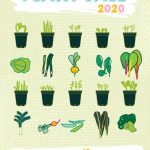
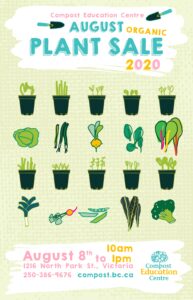
August Organic Plant Sale
Saturday, August 8, 10am-1pm
Vendor plant list (some vendors missing):
Compost Education Centre

Brussel Sprouts (Igor)
Purple Sprouting Broccoli
Lennox Cabbage
Galleon Cauliflower
Fordhook Chard
Rainbow Chard
Danish Ballhead Cabbage
Siberian Kale
Rainbow Kale
Lacinato Kale
Red Russian Kale
Kale mix
Collards
Arugula
Red Romaine
Mixed Mustards

Metchosin Farms

-lettuce
-chard
-kale
-salad mix
-collard
-purple sprouting broccoli
-broccoli
-corn salad
-cilantro
-Springbank clover (traditionally-cultivated native food plant – what Clover Point in Victoria is named after)
-white guava
-dragon fruit cactus
-passion fruit vine

Haliburton Farms (Joyful Agriculture)
Black currant
Rosemary
Butterfly milkweed
Mallow
Lavender
Gooseberry

Chard, rainbow
Kale, assorted
Green onion
Snow pea
Rapini
Tatsoi
Lettuces
Cabbage

Fresh Produce:

Tomatoes
Potatoes
Assorted herbs
Kale
Chard
Garlic
Squashes
Flower bouquets

Saanich Organics

Beets, collards, rutabaga, kohlrabi, green onions, cabbage, napa cabbage, chard, lettuce, spinach, mei qing choi, arugula, purple top turnips, red russian kale, sprouting broccoli, tatsoi, corn salad (mache) and cilantro


Posted in Announcement, Blog, Events, Food Security, News, Organic GardeningTagged , , , , ,

Saturday, August 8th, August Organic Plant Sale

July 10, 2020


For more information on vendors, location, COVID protocols, and winter garden plant starts click here!


Posted in Announcement, Blog, Events, Food Security, News, Organic GardeningTagged , , , , , , , ,

August Organic Plant Sale: Saturday, August 17, 2019

July 19, 2019


Missed the window in June and July to seed your winter vegetable garden? Not to worry, we’re hosting our 8th annual August Organic Plant sale so you can still have fresh greens and herbs throughout the winter!

The plant sale will be held Saturday, August 17th from 10am to 1pm on the street outside the CEC (1216 North Park Street). Gardeners can expect to find a wide selection of plants for fall and winter growing and harvest including kale, broccoli, cabbages, collards, arugula, cold hardy lettuces, herbs like cilantro and parsley, and many others. Local, organic farmers are:

Ravensong Seeds

Saanich Organics

The Compost Education Centre

Metchosin Farm

Cam Kidd with Perennials, and Mushroom Spawn

Haliburton Farm

and more!

No need to register for this event but feel free to call our office at 250 386 9676 or contact us via email at office at compost.bc.ca if you have any questions.

Posted in Announcement, Blog, Events, Food Security, News, Organic GardeningTagged , , , ,