GET INVOLVED

Book a Child & Youth Workshop

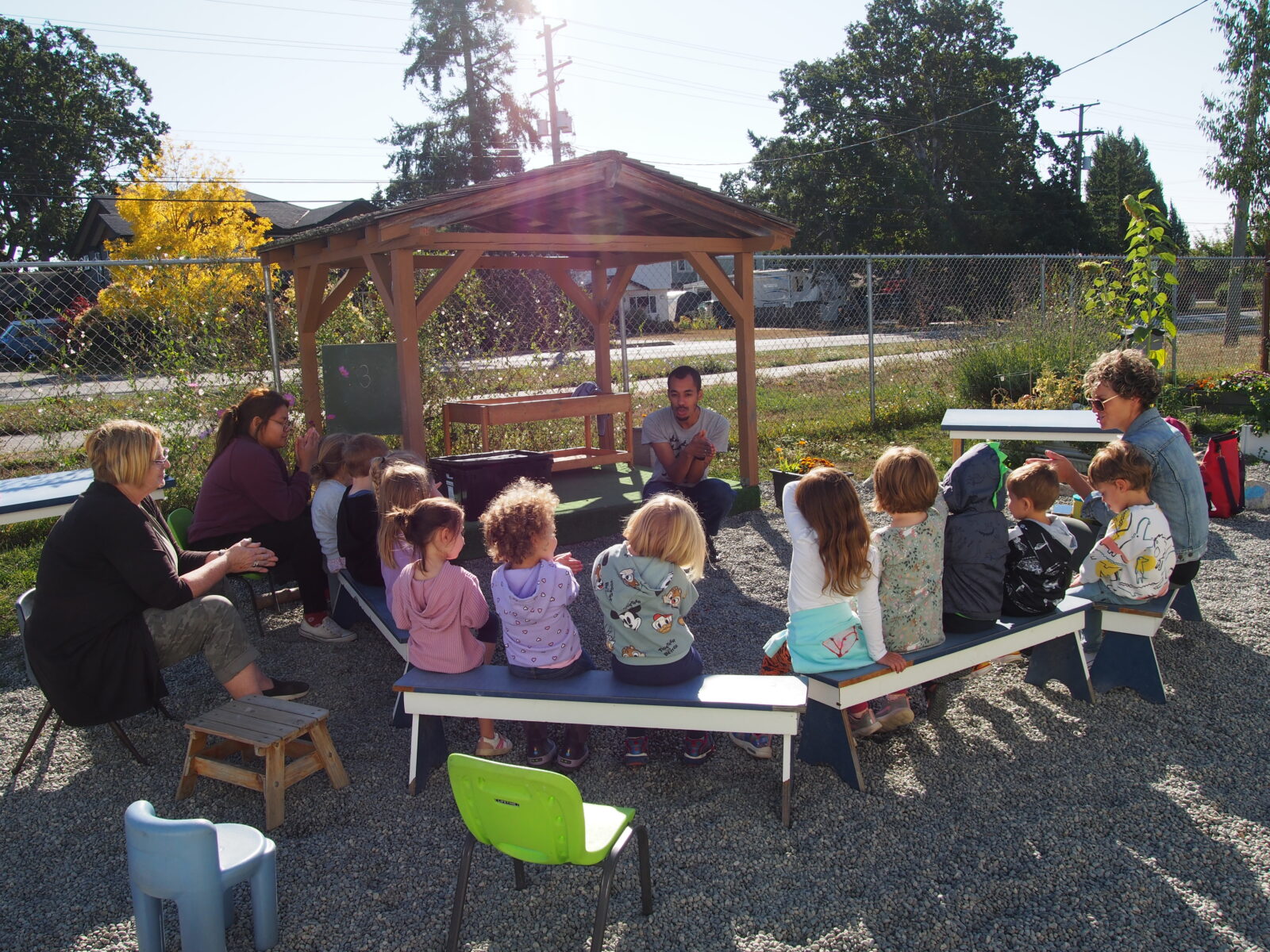
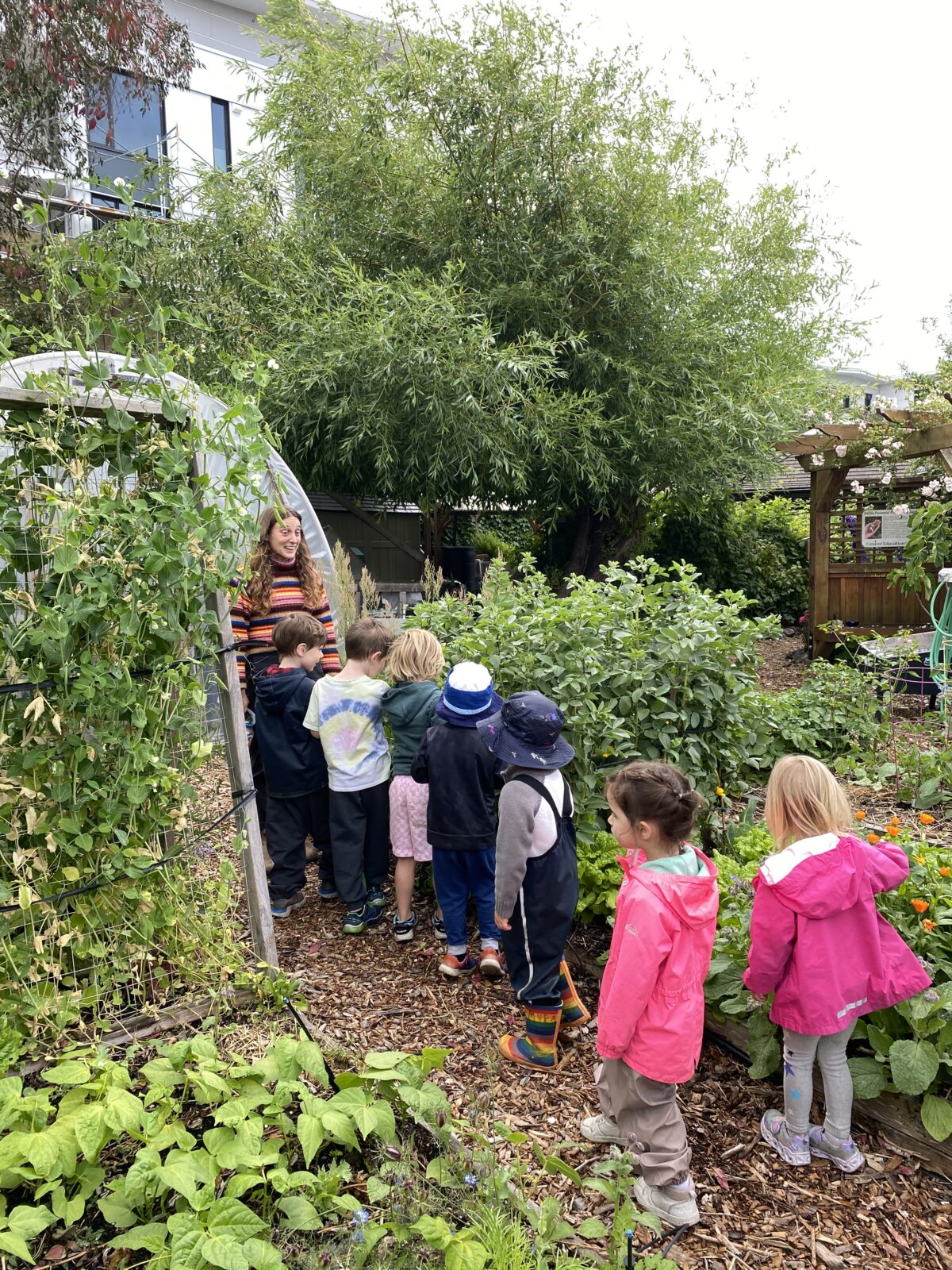
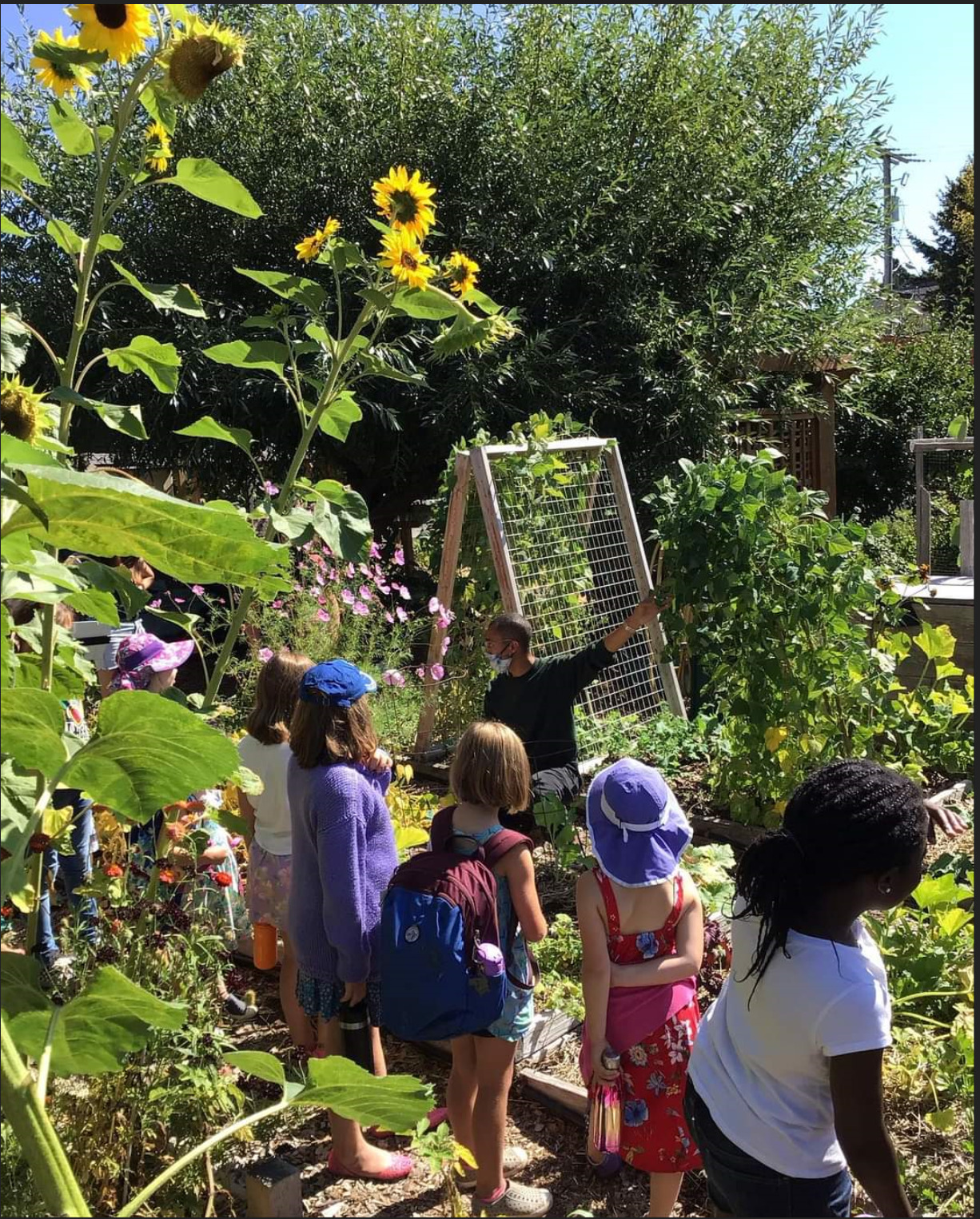
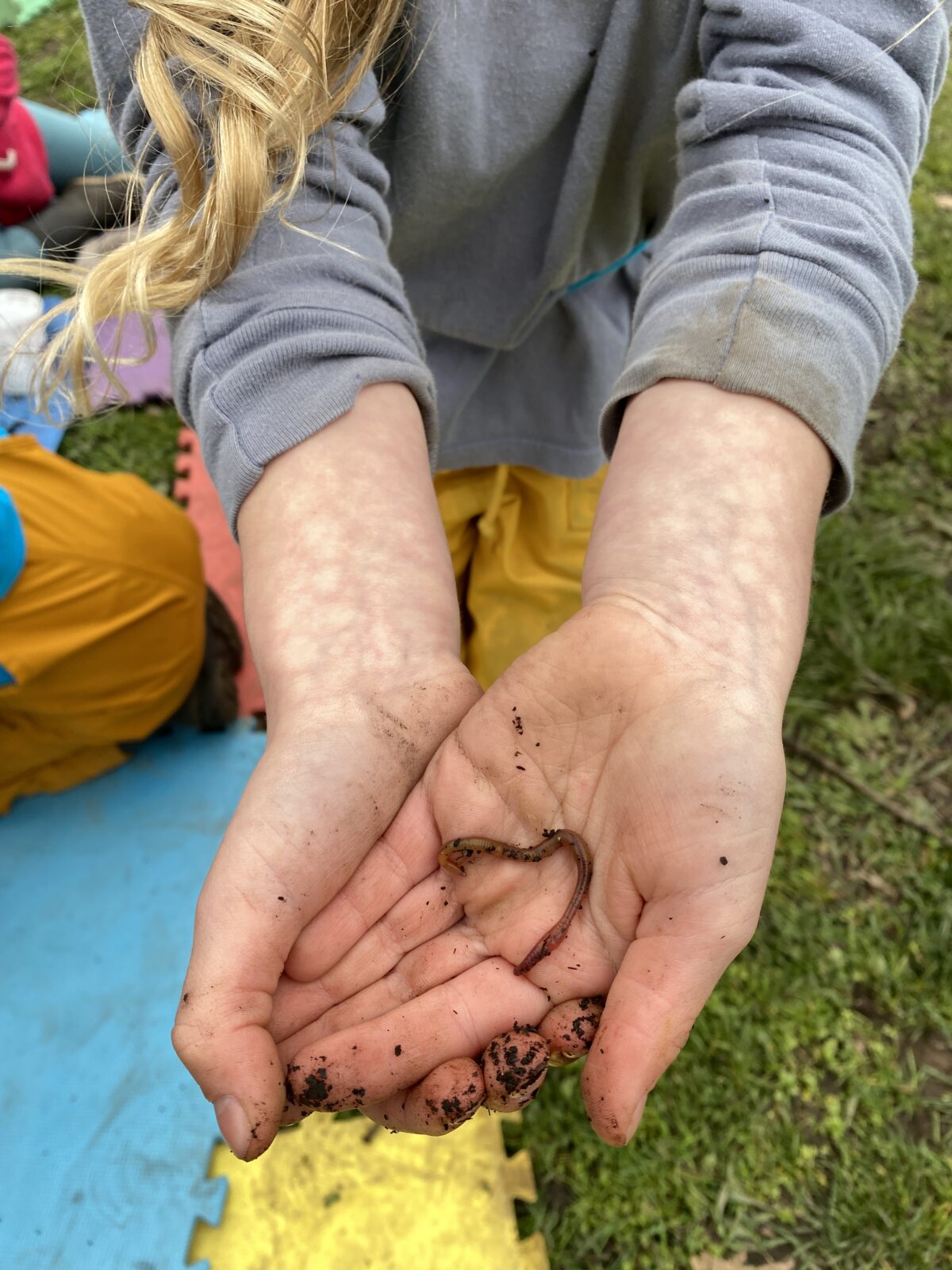
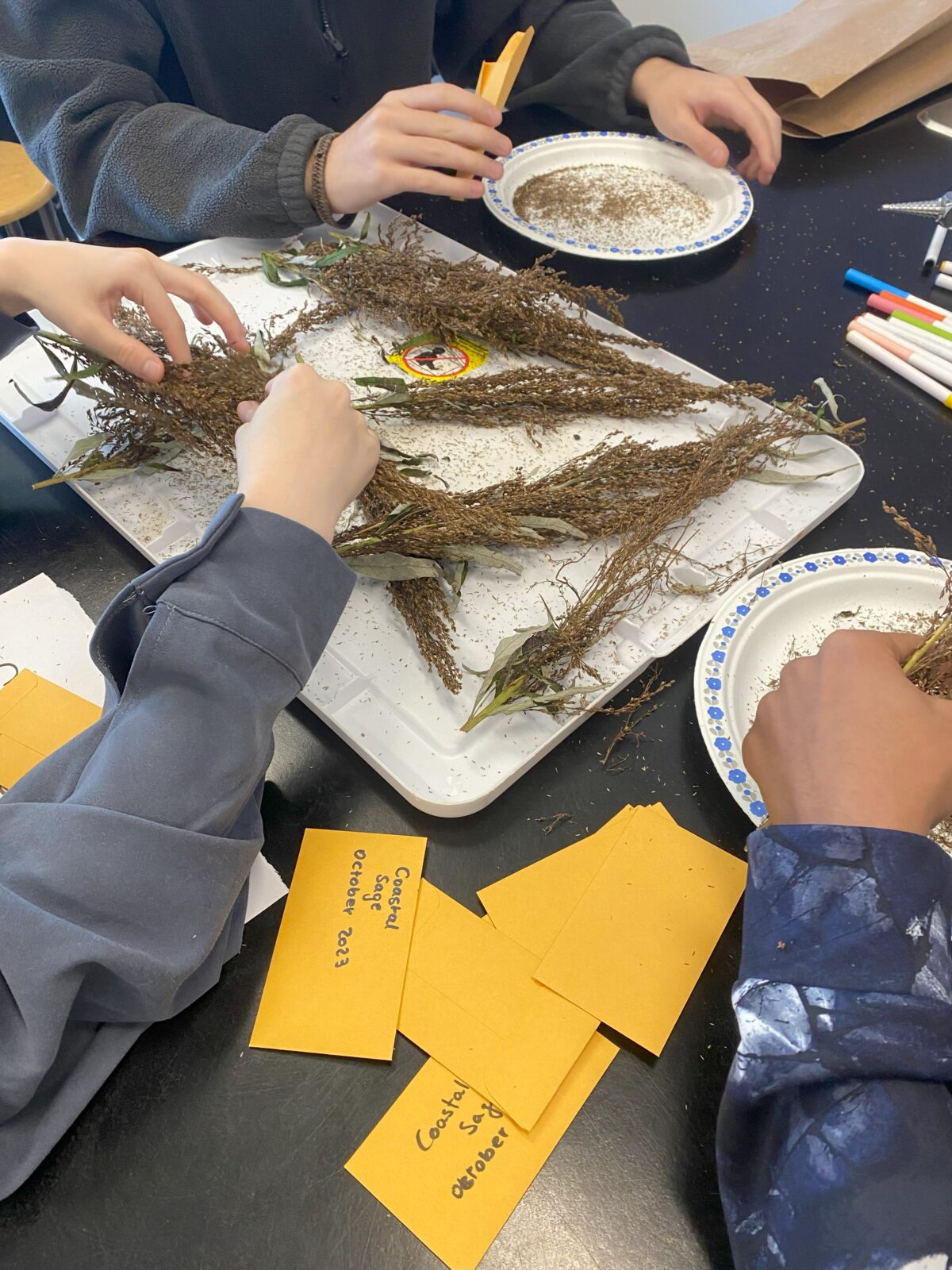
Book a child and youth workshop in your classroom, or come visit our teaching gardens! We offer a variety of programming for learners from preschool to grade 12. Inquire about the possibility of French composting workshops for immersion classes from kindergarten to grade 8!

Accessibility Information

Our educators aim to make our workshops accessible and enjoyable for students with diverse needs. Get in touch if you have students who may benefit from accommodations so that we can best prepare for your workshop. For information about accessibility on our site during visits, see here.

Testimonials

“It was very apparent that the kids and their parents thoroughly enjoyed the program. The day after the program I had one little guy, who attended the program, ask me to find him books on composting as his family were going to build a compost!”

“I liked how experiential the tour was for the children. The facilitator was skilled at maintaining the children’s attention and keeping them interested.”

“Elora was very interactive, engaging, and fun! She noticed when the children needed to move and was willing to respond to many questions, comments, and student inquiries!”

  • Spring Plant Sale – May 9th, 2026

    Save the Date! The Spring plant sale will be held on May 9th, 2026 from 10am-2pm. The plant sale will take place in Haegert Park (1202 Yukon St.) one block from our site on North Park street. Bring a blanket or a picnic so you can enjoy the music in the shade of the giant…

    Save the Date! The Spring plant sale will be held on May 9th, 2026 from 10am-2pm. The plant sale will take place in Haegert Park (1202 Yukon St.) one block from our site on North Park street. Bring a blanket or a picnic so you can enjoy the music in the shade of the giant Sequoia tree. Entry by donation. No one turned away from lack of funds. Dogs welcome.

    The Spring Organic Plant Sale features local farmers offering a wide variety of organically grown vegetable, flower and herb seedlings to get you off to a successful start this growing season.

    What you can look forward to:

    • The largest selection of organically grown heirloom tomato varieties all in one place for easy shopping

    • Organically grown vegetable starts from arugula to zucchini

    • Native plants for your low maintenance garden

    • Perennial edibles like berry bushes and other fruiting shrubs

    • Medicinal herbs like English lavender, chamomile and yarrow

    • Culinary herbs like Genovese basil, dill and chives

    • Companion plants like marigolds, sweet cicely and comfrey

    Accessibility Information

    The sale will be happening in Haegert park which is grassy and slightly sloped, there are curb cuts at various entrance points to get into the park.

    Visitors can park at the Vic High parking lot between Gladstone Avenue and Grant St. The parking lot is a 200m walk from Haegert Park.

    Thank you to our sponsors:

    • Hatchet & Seed
    • LADR Landscape Architects
    • Biophilia Collective
    • Country Grocer
    • Cold Comfort
    • Habit Coffee
    • Patagonia Victoria
    • The Private Network
    • Zero Waste Emporium
    • Chek News
    • West Coast Seeds

    The Compost Education Centre is located on unceded and occupied Indigenous territories, specifically the land of the Lekwungen speaking people—the Xwsepsum and Songhees Nations. These nations are two of many, made up of individuals who have lived within the porous boundaries of what is considered Coast Salish, Nuu-Chah-Nulth and Kwakwa’wakw Territory (Vancouver Island) since time immemorial. At the CEC we seek to respect, honour and continually grow our own understandings of Indigenous rights and history, and to fulfill our responsibilities as settlers, who live and work directly with the land and its complex, vital ecologies and our diverse, evolving communities.

  • Hello from Ashley Higginson

    Hello Community Neighbours!               My name is Ashley Higginson, and I am a 4th year Anthropology major with a specialization in Community Engagement under Professor Ryan Hilpert. I am of settler heritage and come from a long line of agriculturalists on my paternal side. This is my final semester of my undergraduate degree, and I…

    Hello Community Neighbours!

                  My name is Ashley Higginson, and I am a 4th year Anthropology major with a specialization in Community Engagement under Professor Ryan Hilpert. I am of settler heritage and come from a long line of agriculturalists on my paternal side. This is my final semester of my undergraduate degree, and I have been so blessed to collaborate with Jeffrey these past few months. My primary role has been educational support during the CEC’s Let It Rot program at a local high school. It has been both eye-opening and humbling to engage with youth and learn more about the importance of soil health. I was raised by a soil-scientist-gone-teacher so you can imagine that I enjoy this line of volunteering very much!  

                  Since beginning my volunteer role at the CEC, I’ve been able to sit in on meetings; attend a Seedy Saturday event with Jeffrey, Claire, and Haya; harvest worms for the school programs; and help Jeffrey transport a rain barrel to and from our high school site. It has been both informative, as I gain insight into the non-profit sector, and rewarding, as I learn alongside the teenagers in our classroom. My passion for environmental justice has grown, and my newfound understanding of the CEC’s Anti-Oppressive Policy has encouraged me to consider how I’m showing up as a volunteer. Over the course of this semester, I have managed to discover so many new and valuable perspectives and skills, that I look forward to one day working for a non-profit myself!

                  What I’ve come to learn is that the Compost Education Centre is a very special place that is nestled right within the community and willing to grow with and in response to community need. I have had the pleasure of volunteering here, and I can’t wait to sign up for some of their classes… or perhaps even a membership! I might have left the site some days with dirt under the fingernails, water-soaked knees, or hair falling out of its elastic, but nothing will ever compare to the memories that I took home too.

  • New partnering discount business for members

    We are excited to add the Zero Waste Emporium to list of list of member discount businesses! You can save 10% any time you shop at the Zero Waste Emporium as a CEC member 🐝 Learn more about our memberships and other discount partners. Zero Waste Emporium Inc. is a community-focused refillery grocery store, founded…

    We are excited to add the Zero Waste Emporium to list of list of member discount businesses! You can save 10% any time you shop at the Zero Waste Emporium as a CEC member 🐝

    Learn more about our memberships and other discount partners.

    Zero Waste Emporium Inc. is a community-focused refillery grocery store, founded with a simple belief: everyday choices can build a healthier, more sustainable community. Since opening our doors, we’ve worked to make low‑waste living accessible, affordable, and welcoming for everyone—offering package‑free groceries, local products, and refill options that reduce environmental impact without sacrificing quality or convenience.

    As we’ve grown, so has our commitment to community ownership and shared stewardship. That’s why we’re beginning the process of transitioning Zero Waste Emporium into a community cooperative. This shift reflects our core values: transparency, collaboration, and collective action. A cooperative model allows our customers, neighbours, and supporters to become members, co‑owners, and active participants in shaping the future of sustainable retail in Greater Victoria.

    Our goal is simple: build a resilient, community-led grocery model that keeps dollars local, supports small producers, and empowers people to reduce waste in ways that are practical and joyful. By becoming a cooperative, we’re ensuring that Zero Waste Emporium remains rooted in community needs, guided by shared values, and built for long-term impact.

    Together, we’re creating more than a store—we’re building a movement for a cleaner, more connected, and more sustainable Victoria.

  • Garden Party and Mural Celebration

    What: A celebration of public art installations and an opportunity to meet your neighbours at the Compost Education Centre. When: Sunday, May 24; 12:00pm-4:00pm Where: 1216 North Park St. Compost Education Centre Event Description: The Compost Ed Centre’s artist-in-residence is painting a cool road surface mural just outside our gate at 1216 North Park St.…

    What: A celebration of public art installations and an opportunity to meet your neighbours at the Compost Education Centre.

    When: Sunday, May 24; 12:00pm-4:00pm

    Where: 1216 North Park St. Compost Education Centre

    Event Description: The Compost Ed Centre’s artist-in-residence is painting a cool road surface mural just outside our gate at 1216 North Park St. We’re hosting a party to celebrate the mural and welcome our new Caledonia neighbors to the Fernwood community. The event will feature pedal-powered music and local musicians, kids activities, botanical elixirs from Green Muse Herbs, and more! Please support this community event by bringing a baked good (with a list of ingredients) to share.

    Site Accessibility: The Compost Education Centre site has paths made of wood chips. Mobility devices with wheels (such as wheelchairs, walkers etc.) are sometimes difficult to use on site. The Strawbale learning classroom is accessed via a wooden ramp, and it has a wide double door and a ramp leading up to it. Once inside the Strawbale, the floor is a level hard surface. There is a single-stall gender-neutral washroom on site. The washroom is not wheelchair accessible. There is a wooden ramp up to the washroom door and a small step over the door frame into the washroom. The retail space is not wheelchair accessible; there are four steps up into our retail space.

  • Braiding Sweetgrass for Educators

    In the last two weeks of January 2026, I participated in a professional development opportunity: Braiding Sweetgrass for Educators. This learning course was organized by Outdoor Learning School & Store, and facilitated by Monique Gray Smith. Monique is an award-winning and best-selling Indigenous author, who adapted Robin Wall Kimmerer’s New York Times Best Selling book,…

    In the last two weeks of January 2026, I participated in a professional development opportunity: Braiding Sweetgrass for Educators. This learning course was organized by Outdoor Learning School & Store, and facilitated by Monique Gray Smith. Monique is an award-winning and best-selling Indigenous author, who adapted Robin Wall Kimmerer’s New York Times Best Selling book, Braiding Sweetgrass for the next generation of readers.

    In the 4 sessions of the course, the book Braiding Sweetgrass for Young Adults served as a guiding voice, sparking discussions around Indigenous wisdom, teachings of plants, scientific knowledge, history and social and emotional wellness. 

    Since the course was offered online, it was really neat to be able to meet and connect with educators, from so many different places, who are also passionate about applying this land-based learning lens with the young people in their lives. Another highlight of the course was that we were joined by Robin Wall Kimmerer in the first session!

    After we wrapped up the fourth and final session, I left the course with a renewed sense of commitment. We were introduced to many Potawatomi plants and stories. I live, work, and teach on Coast Salish lands- the plants, animals, landscapes, and cultures have their differences. Nevertheless gratitude, reciprocity, careful observation, and respectful harvesting do not know boundaries. All beings everywhere, human and non-human, have gifts that we share. It is important that we share them in good way to ensure mutual learning and flourishing for all. I have a responsibility to facilitate learning that centers these themes and that reflects the place where I am. I am really looking forward to bringing this wealth of wisdom with me into all the CRD classrooms I have the privilege to visit while teaching workshops.  

    I want to express my sincerest gratitude to both Monique Gray Smith and Robin Wall Kimmerer for generously sharing their time and knowledge. If you would like deeper engagement with their past, present, and future works, please visit the following links:

    https://www.robinwallkimmerer.com

    https://www.moniquegraysmith.com

    Haya Aldoori, Child and Youth Education Program Co-Coordinator

  • Anti-Oppression Policy

    The Compost Education Centre reconnects many people, young and old, to simple, land-based, resiliency practices. We understand that this cannot happen without also actively working towards right relations, anti-oppression, and environmental justice, making them an integral part of our mission. It is for this reason that, over the past 5+ years, our staff have been…

    The Compost Education Centre reconnects many people, young and old, to simple, land-based, resiliency practices. We understand that this cannot happen without also actively working towards right relations, anti-oppression, and environmental justice, making them an integral part of our mission. It is for this reason that, over the past 5+ years, our staff have been reflecting on, discussing, and crafting a formalized anti-oppression policy. We’ve now arrived at something “final,” and we would love to share it with our community.   If you have any thoughts, comments, or questions, we invite you to share them with us! Our hope is that this policy will serve as a guiding light, informing us as we go about our day-to-day, and will remain iterative and adaptable. To keep our community informed about our journey, we will continue to update the “Our Commitments in action” section of the Anti-Oppression Statement on our website with blog posts that communicate what changes and efforts we have implemented towards our stated goals and objectives.

    Anti-Oppression Policy

    The Compost Education Centre (CEC) recognizes that many of the economic, political, social, cultural and institutional dynamics of domination, power and privilege existing within society at large also exist within our organization on both individual and systemic levels. People in our society face levels of oppression and discrimination based on race, colour, sexual orientation, gender, gender expression, culture, ethnicity, language and linguistic origin, socio-economic class, ability, religion or faith or beliefs, ancestry, nationality, family status, and residency/migration status. This policy seeks to outline the steps to ensure that the CEC community (staff, volunteers, members, program participants, and board members) are consistently working to address these dynamics at individual and institutional levels. This policy is intended to act as a guiding policy for other policies, organizational procedures, and workplace behavior. 

    The policy objectives are to: 

    1. Encourage the anti-oppression learning journeys of CEC community members. 
    2. Embed anti-oppression learnings into organization policies, procedures, practices to guide internally focused decision-making (e.g. hiring) and externally focused decision-making (e.g. programming and advocacy). 
    3. Empower and amplify marginalized voices in the development and evaluation of our programs. 

    We want to acknowledge that no written policy can dismantle oppressive structures, but it expresses our sustained dedication to this work. Additionally, we face certain organizational limitations that constrain our ability to pursue anti-oppression initiatives. We name the following as our limitations and recognize that there are more limitations that we have not: 

    • Our staff and board are predominately comprised of settlers. 
    • We are an able-bodied and predominantly white-led organization 
    • We primarily teach settlers how to do hands-on regenerative soil practices.   
    • Our education is contingent upon the availability of treaty lands for hands on regenerative soil practices. 
    • We have limited funding allocated for accessibility improvements to our site as we are constrained by the physical space that we operate in  
    • As a non-profit organization, we are accountable to colonial institutions who influence our ability to distribute wealth and power within our organization and beyond. 
    • Our physical location influences and limits the communities and individuals that we can serve with our work. 

    Context 

    Our main operations occur on Lekwungen lands. Historically, Lekwungen lands were primarily prairie meadows. These meadows were cultivated through controlled burning for staple crops like qʷəɬáʔalʔ (Camas). Upon their arrival, the Hudson’s Bay Company chose Camosack (Victoria Harbour) because it was bordered by gently sloping meadow that was suitable for farming without the need to clear the land (presently Míqәn or Beacon Hill Park). Since then, “Victoria” has been known as the Garden City because of its mild winters which are ideal for growing whole and nutritious foods. The legacy of “Victoria” would be impossible without the thousands of years of Indigenous hands-on regenerative soil practices (HORSP).   Since the onset of colonization, many other systemic inequities along the lines of religion, race, class, and gender have prevented everyone from accessing food and processing wastes, resulting in disconnection from land and community.  

    Given this legacy of HORSP as well as inequities of the colonial food systems on these lands, we understand that our vision to cultivate resilient communities, which enable the land and all living beings to thrive, is reflective of a desire to feed communities and return nutrients back to lands that were not necessarily ours to begin with.  As an organization, we are curious and mindful about our role and responsibility in cultivating healthy relationships with all people and beings while being respectful of these histories.  

    Anti-Oppression Learning Journey 

    CEC community members are encouraged to pursue a proactive journey of learning, empathy, and action to identify, confront, and dismantle systemic power imbalances on personal and organizational scales. Some of the tools that the CEC provides as an organization include to support these learning journeys are: 

    • A DEI onboarding package for new board members, volunteers, and staff. 
    • Additional professional development opportunities on the topics of DEI for board members and staff. 
    • Quarterly staff discussions to understand and address systemic oppression as a staff team. 
    • The re-establishment of community agreements annually and with the addition of new permanent staff. Community agreements are guidelines to ensure open, active, inclusive, and respectful dialogue and participation. 
    • A regular assessment system to evaluate the effectiveness of our anti-oppression initiatives using feedback to continuously refine and improve our policies and practices. The assessment system relies on the use of a survey form that’s administered periodically to evaluate the effectiveness of our anti-oppression initiatives and continuously refine our policies and practices. 

    Engagement with External Movements 

    The CEC recognizes that our work is connected to broader political issues and that we are empowered to mobilize our communities in support of human rights. 

    In their roles, staff may be asked to engage with public policy issues (e.g. through communications, signing open letters) on behalf of the organization. Before staff engage with public policy issues, they must evaluate the following: 

    1. Does the issue relate directly to the organization’s mission, goals, and values? 
    2. Does the issue align with the organization’s anti-oppression policy?  
    3. Is there a conflict of interest i.e. does the Executive Director’s personal interests influence their decision to sign on behalf of the organization?  
    4. What is the potential positive or negative impact of engaging with the issue?  
    5. How does engaging affect stakeholders such as donors, beneficiaries, partners, and the public?  
    6. Does the issue have partisan implications that could impact the organization’s reputation, funding, or charitable status?  
    7. Does engagement on behalf of the organization increase the strength and potential effect of the engagement? 

    In addition to evaluating the criteria above, staff may consult with board members and other staff to determine whether there’s consensus in engaging on the public policy issue. The Executive Director will maintain a record of all public policy issue engagement (considered, pursued, and declined) as well as the reasons for the decision. 

    Additionally, we commit to supporting staffs’ personal commitments to movements rooted in diversity, equity, and inclusion. To enable conscious action and support employee wellness, the CEC: 

    • Allows staff to take bereavement leave to process the grief of the current moment and the weight of its history (see Section 7.2 in the Employee Policy Manual). 
    • Collates and shares existing resources such as mutual aid, counselling, workshops, and fundraisers among team members. 
    • Pauses our operations at strategic moments. The decision to pause our operations at strategic moments will be taken by staff via a consensus-based decision-making model after a landscape survey of other organizational actions. 
    • Gives three paid “Advancing Equity and Justice” days to all full-time staff to enable the participation in activities and organizing around advancing equity and justice outside of the work that we do together (see Section 7.9 in the Employee Policy Manual). 

    Non-Harassment / Non-Discrimination 

    The Society prohibits discrimination or harassment based on race, color, religion, creed, sex, national origin, age, disability, marital status, veteran status, or any other status protected by the Charter of Human Rights and Freedoms. Each employee has the right to work in a professional atmosphere that promotes equal employment opportunities and is free from discriminatory practices. Violations of this policy will not be tolerated.  

    Discrimination includes but is not limited to making any employment decision or employment related action based on race, color, religion, creed, age, sex, disability, national origin, marital or veteran status, or any other status protected by applicable law. 

    Harassment is generally defined as unwelcome verbal or non-verbal conduct based upon a person’s protected characteristic. Harassment: 

    • Denigrates or shows hostility or aversion toward the person because of the characteristic, 
    • Affects the person’s employment opportunities or benefits, 
    • Has the purpose or effect of unreasonably interfering with the person’s work performance, and/or 
    • Has the purpose or effect of creating an intimidating, hostile, or offensive working environment. 

    Harassing conduct includes but is not limited to epithets; slurs or negative stereotyping; threatening, intimidating or hostile acts; denigrating jokes and display or circulation in the workplace of written or graphic material that denigrates or shows hostility or aversion toward an individual or group based on their protected characteristic. 

    Sexual harassment is defined as unwelcome sexual advances, requests for sexual favors, and other verbal, visual or physical conduct of a sexual nature, when: 

    1. Submission to such conduct is made either explicitly or implicitly a term or condition of an individual’s employment; 
    2. Submission to or rejection of such conduct by an individual is used as the basis for employment decisions affecting such individual; or 
    3. Such conduct has the purpose or effect of unreasonably interfering with an individual’s work performance or creating an intimidating, hostile, or offensive working environment. 


    Examples of sexual harassment include: unwelcome or unsolicited sexual advances; displaying sexually suggestive material; unwelcome sexual flirtations, advances, or propositions; suggestive comments; verbal abuse of a sexual nature; sexually oriented jokes; crude or vulgar language or gestures; graphic or verbal commentaries about an individual’s body; display or distribution of obscene materials; physical contact such as patting, pinching or brushing against someone’s body; or physical assault of a sexual nature.  

    Addressing Complaints and Concerns 

    We take all complaints and concerns regarding oppressive or discriminatory practices seriously and are committed to investigating and addressing them in accordance with our principles of equity, diversity, and inclusion. Individuals within the Compost Education Centre are encouraged to approach one another about oppressive behavior and to hold each other accountable to the principles of Anti-Oppression in a respectful and compassionate way. If an employee chooses to bring forward an informal complaint, they may approach the Executive Director or a Board member. During this initial interaction, the Executive Director or Board member will inform the complainant that they have the option to proceed with either a formal or informal complaint process.  

    This policy applies to both internal conflicts (i.e. between employees, between the Executive Director and employees, between employees and volunteers) as well as external conflicts (i.e. between employees and program participants, between employees and the public).  

    1. Employees should report any grievances, harassment, or discrimination incidents. Employees have the choice of reporting to the Executive Director, to the designated Board Directors (e.g. in case of a complaint against the Executive Director), or to all staff via the anti-oppression discussion (see section 10.3) format. When/if complaints are made to all staff, the Executive Director is still responsible for resolving the conflict. Complaints can be made verbally or in writing. 
    2. All complaints and subsequent discussions will be treated with the highest level of confidentiality with information shared only as necessary for investigation and resolution. There is an interest in resolving conflicts with promptness and timeliness. When it is not possible for the process to be prompt, the party responsible for resolving the conflict (either the Executive Director or the designated Board of Directors) will ensure prompt communication with the parties involved about the process. 
    3. The party responsible for resolving the conflict (i.e. the Executive Director or a designated Board member) will conduct a prompt, fair, and thorough investigation to establish the facts, determine context, and assess the complaint’s validity. As part of the investigation, the party responsible for resolving the conflict may initiate an anti-oppression discussion (with approval from the complainant) with all staff to work through the complaint with all staff. 
    4. Post-investigation, considering the complainant’s desired outcomes, the Executive Director or designated Board member will propose a resolution. If the Executive Director or designated Board member feels like they don’t have the capacity to propose a solution, they may access external resources or experts (including confidential discussion with other Board Directors) to support the process. The Board of Directors can approve the financial expense of accessing additional resources and expertise. 
    5. Both parties will be informed of the proposed solution and the steps taken to address the complaint. Examples of potential resolutions include:
      • Offering counseling support services to those affected by the incident (to be financially covered by insurance or by the CEC). 
      • Facilitating a mediated discussion between parties to reach a mutual agreement. Implementing warnings, reprimands, or other appropriate disciplinary measures against the perpetrator. Providing additional anti-oppression training to prevent future incidents. 
      • Reviewing and updating workplace policies to better protect employees. 
      • If either party disagrees with the resolution, they may appeal to the Board of Directors (excluding any members previously involved) within ten working days via a verbal or written process. 
      • Securely store all documentation related to the complaint and resolution process so that they are only accessible to authorized personnel. 

    The CEC prohibits any form of retaliation against individuals who report grievances or participate in investigations. 

  • Grow the Best Garden is Back!

    Join us for a series that explores a wide variety of incredibly important gardening topics, from planning and planting, to harvest and seed saving! Whether you’re a novice or an experienced gardener, this series will be certain to offer you tips and tricks, strategies and tools for growing your best garden ever. The in-person series…

    Join us for a series that explores a wide variety of incredibly important gardening topics, from planning and planting, to harvest and seed saving!

    Whether you’re a novice or an experienced gardener, this series will be certain to offer you tips and tricks, strategies and tools for growing your best garden ever.

    The in-person series features five 3 hour long workshops, once per month for five months. We’ll have at least 2 hours of instruction, a hands on activity in the gardens, and time for questions and answers.


    The online series features five pre-recorded approximately 2 hour long online talks, once per month for five months. This flexible asynchronous learning allows you to access the workshops when you want and your expert instructor is available in between sessions by phone and email for questions. You will be emailed a link to view the talks once each month, and will be able to view them in any web browser. There will be a live 1 hour Q & A session at the end of the series hosted on Microsoft Teams, the link will be emailed to you in May.

    Interested in attending some of the in the series workshops but not all of them? Sign up for one off workshops here.

    Series Outline

    #1: Plan and Prepare Your Garden – January

    It’s the time of year when gardeners get excited about plotting and planning what they will be planting in their garden. Here on Southern Vancouver Island, good planning makes it possible to harvest produce from our gardens during every month of the year. \

    #2: Seeding Techniques and Garden Care – February

    There are so many ways to grow plants, and in this workshop, we’ll learn about the most common seeding techniques, and then get into garden care during the different seasons of the year.

    #3: Build Incredible Soil – March

    In this workshop we’ll explore the basis of all life on earth: Healthy Soil! We’ll explore what soil is made of and the vast importance of soil microbes.

    #4: Extending Your Harvest & Saving Seeds – April

    In this workshop we’ll explore timelines for seeding to ensure an extended harvest – be the one at a potluck in January with a backyard salad on offer! We’ll explore ways and ways to extend your harvest longer into the fall and winter. Then we’ll launch into the importance and practice of seed saving.

    #5: Harvest & Preserve Your Bounty – May

    The most fun part of gardening is the delicious harvest and squirreling some away for winter enjoyment! In this workshop we’ll talk optimal harvest windows for different crops and cover the basics of food preservation. Preserving food is not only a delicious way to taste summer in the dark rainy days of winter, but it is also an act of sustainability and creates more security in the food system. We’ll allow some time for final questions and answers before we wrap up the final workshop in the series!

    One-off workshops