Little Thai Place’s Food Waste Reduction Story

August 29, 2026
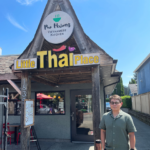

While pursuing his Master’s degree in Environment and Management at Royal Roads University (RRU), Paul Vaisayasakulkit, Director and Sustainability Lead at Little Thai Place, connected with the Compost Ed Centre’s Education Director, Kayla Siefried. Paul and his business partner at Little Thai Place had noticed rising food costs and associated expenses with disposing of food waste. Paul got some good ideas from Kayla, and he decided to focus his RRU Master’s capstone project on reducing food waste at Little Thai Place.

Paul found three categories of food waste at Little Thai Place: spoilage of ingredients, trimmings from food preparation, and customer waste. The majority of the restaurant’s food waste was from food preparation, and the biggest environmental impact in terms of greenhouse gas emissions was from any wasted meat. Paul surveyed customers, connected with staff, and talked to his business partner to identify solutions that have resulted in decreased food waste – and improved the restaurant’s bottom line. These practices include:

  • Encouraging customers to take their leftovers home and, where possible, bring their own reusable container.
  • Modifying food preparation techniques to minimize trimmings.
  • Using food trimmings in staff meals.
  • Separating organic waste in the kitchen from regular garbage pickup.

Our regional Landfill, Hartland, is filling up!

It’s set to be full by 2050, and the options for post-2050 are not perfect. Even though organics have been banned from the landfill since 2015, about 16.7% of the waste disposed of at the landfill is organic and it emits greenhouse gas.

In the CRD, restaurants are responsible for identifying, contracting with, and paying a private waste hauler to pick up organic waste to be composted. When restaurants hire private waste haulers, that material is transported to composting facilities as far away as Nanaimo. Restaurants are either producing greenhouse gas emissions by sending their organics to the landfill OR by paying to have them transported over the Malahat to be composted.

Imagine that instead of sending our organics our of the regions to be composted – we could instead have neighbourhood-level composting facilities that produce a soil amendment that can be used to enhanced soil quality in nearby community farms, gardens, and boulevards.

Solutions for Organic Waste

Individual Solutions

Bring your reusable container with you when you go out to eat. If there are ingredients and sides in a meal that you don’t like and won’t eat, communicate that to the server when you’re ordering. Learn more about the food waste practices at your favourite restaurants and support restaurants that are doing cool work.

Community Solutions

Get in touch to join us in advocating for comprehensive management of curbside organic pickup for restaurants across the region by a municipally-provided service.

Business Solutions

Thinking outside the box and getting creative around reducing organic food waste can help to improve your bottom line. Paul wants to help by sharing his methodology so get in touch to learn more!

Posted in Announcement, Blog, Civic Engagement, Composting, Featured, Food Security, Partnerships, Sustainability, Waste Diversion
Closing the Loop at Saanich Neighborhood Place

August 1, 2025


Compost Education Centre board member Tina wears a lot of different hats at Saanich Neighbourhood Place, a neighbourhood house that provides child care, family, seniors, and community programs. Like other neighbourhood houses in Victoria, SNP has taken on a lot of food security initiatives to respond to community need. SNP provides free food to the community through their Best Babies, Family Dinner, Community Kitchen, and Community Fridge programming. Tina is the Head of Food Security and a chef at SNP: she teaches workshops, makes delicious and healthy meals for the community, and she manages all of the organization’s food rescue.

About 70% of the food distributed through SNP programming is food that is “rescued” or donated. SNP purchases the remaining 30% of food required. Tina and other SNP staff have developed connections with local farmers like Gatton House Farm and Gorge Tillicum Urban Farmers that donate fresh produce. Neighbors and community members also donate any excess produce they might have, and SNP also receives rescued food from the Mustard Seed and Save On Foods.

The secret to making it all work? Volunteers, community connections, and Tina’s creativity. SNP relies on volunteers to pick up and transport food, and all the donations made by local growers are based on informal – and community-driven – relationships and community connections. And once Tina receives all the donated and rescued food, she crafts accessible menus and meals. She’s a wizard! She manages to figure out what to cook based on what’s available week-to-week.

You would think that Tina had enough on her plate (literally and figuratively!) without taking on more, but she has a vision for SNP and all community organizations in the region: composting and food-growing. Currently, SNP sends some of their organic waste to a local farm, some home with staff to compost at home, and the remainder into a green bin service that they pay for. SNP produces about one full green rollaway bin of organic waste a week, and they’d love to be composting that waste on-site instead to be able to support food growing.

Tina composts at home, and she notices a big difference in her garden. She has a simple composting system, and she notices a huge impact on her garden by amending her soil with the compost twice a year. She wants everyone to be composting more because of how it’s so much better for our environment. Instead of using fertilizers that run off into our waterways, we could instead be “closing the loop” and producing compost that supports our gardening initiatives. It just makes sense to keep all that valuable organic material on-site.

SNP has some underused green spaces that could accommodate a composting system and some growing gardens. Tina and her SNP colleagues see a real opportunity to integrate composting and food growing education into all of their programming – and so do we! We’re looking for funding to support them in establishing those composting systems and accessing whatever education needed.

Posted in Blog, Board, Composting, Featured, Food Security

Calling all local BIPOC & Queer Artists!

June 14, 2025


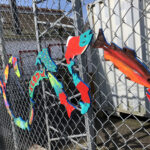
The CEC is looking to hire a BIPOC and/or queer artist to beautify the exterior fencing of the demonstration site, design and paint an image on a picnic tabletop, and a design and paint a road surface mural near the entrance to the demonstration site. In alignment with our goal of community building, the project includes community consultation and an engagement with volunteers on all three of the project components. The ultimate goal of this project is to create a warm, welcoming, approachable environment for all City residents to come and spend time relaxing in the CEC demonstration gardens or to learn about hands-on regenerative soil practices.

This project will be funded by the City of Victoria’s My Great Neighbourhood Grant and an artist fee of approximately $4225 is available, materials are separate and will also be covered by the grant. 

Please see the artist package through the link in our bio to learn how to apply. We invite you to visit our site at 1216 North Park St. and our website (www.compost.bc.ca) to get a feel for the space and where the artwork will be going. Feel free to contact Kayla with any questions you have, ksiefried@compost.bc.ca or 250-386-9676

Deadline for submissions is July 1 at 11:59pm.

Posted in Announcement, Blog, Featured, NewsTagged , ,

Survey for Garden St. Food Forest

February 12, 2025


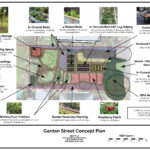
A group of interested neighbours on Garden Street, with the support of the Compost Education Centre are making efforts to have 2518 Garden Street listed officially as a community garden and obtain an official license of occupation with the city of Victoria. We are conducting a survey to ensure that the community is consulted. 

The vision for the Garden Street Food Forest, which currently is an existing unique garden space that is managed by neighbours, is to improve upon this already well established urban oasis green space, with a magic “secret garden” ambiance as a powerful and alluring quality of the unique space for immediate neighbours and the broader community (of human and non-human beings, think birds and bees) to come together for relaxation, sanctuary, education, food security, and to build social connection and community.

If you have any questions about this project, please reach out to Kayla at the Compost Education Centre at 250-386-9676. Thank you for your input, it’s appreciated. 

Posted in Announcement, Blog, Civic Engagement, Featured, News, Organic GardeningTagged , , ,

Updates from an Amateur Gardener, Pt. 1

April 10, 2024


I feel like I’ve won the lottery! A few weeks ago, I got an email from the Oswald Park Community Garden letting me know that there was a garden plot for me. How exciting! 

I live in a third-storey apartment with a very small balcony that doesn’t get a lot of light. I worked from home during the pandemic, and like many people, I got very into my houseplants. I did what I could with the balcony (and I confess I’ve killed a lot of plants). But after working for the Compost Education Centre amidst a beautiful demonstration site (come visit anytime!) for a couple months, I started to hanker for something more. The reasons to grow your own food are extensive. It increases your personal physical and mental health, leads to greater food security, and creates community. I think I also wanted to make the work I do a bit more tangible. As Executive Director, I do a lot of sitting at my computer and in meetings thinking and talking and writing about composting, circular food systems, and community resilience. I love it, but it can feel a bit abstract. I guess I want to make and use some compost with my hands instead of my words. 

I went down a bit of a rabbit hole trying to get my apartment building to okay me starting a boulevard garden, and I received a hard no from the building’s strata council. I put my name on some community garden waitlists, and I daydreamed about starting a guerilla garden somewhere on a piece of neglected land by our apartment. My partner and I talked about housing prices and whether we’d ever want to move out of our cozy apartment to somewhere with a yard. It didn’t feel like my energy was going anywhere. So when the message from Oswald Park Community Garden popped into my email inbox, it felt like a ray of sunshine on a grim late February day. It felt like the promise of spring warmth and long summer days. It felt like I had a place to put my energy. 

I’ve started polling folks for advice, and I have to admit my recent Google search looks something like “first year community garden plot help.” If I had known a few months ago that I was going to have a garden plot, I probably would have registered for Kayla’s “Grow the Best Garden: 5-Part Workshop Series.” Kayla is the CEC’s Site Manager and Community Education Coordinator, and one person who attended her workshops described her as their “invaluable gardening mentor guiding [them] through this journey with unwavering expertise and passion.” I’ve already missed the first two workshops of the series so I’m following the advice of one Redditor to “be patient, be prepare to fail, and be happy to start again.” I’m also asking Kayla for advice on our lunch breaks, and I’m poring over the CEC’s extensive factsheets. 

Stay tuned here for more updates! 

Posted in Adult Education, Blog, Fact Sheet, Featured, ReflectionsTagged , , , , , ,

Help us build more boulevard gardens!

October 5, 2023


Hey residents of Fairfield-Gonzales!
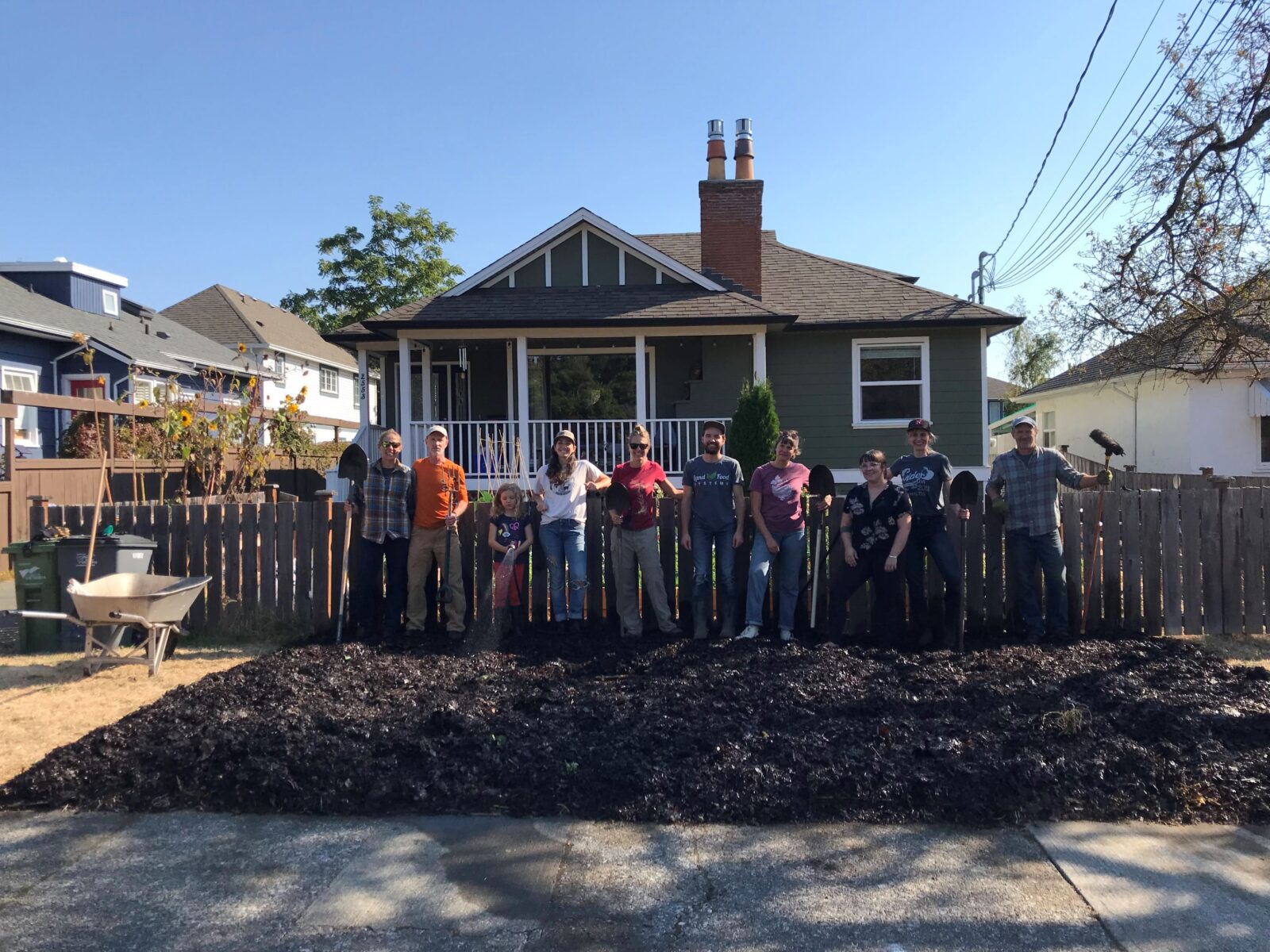
The Compost Education Centre is on a continued mission to see as many boulevard gardens growing in your neighbourhood as possible! We’re hoping to help some folks on this journey in November – by sheet mulching a boulevard together!
If you have an adjacent boulevard to where you live and are able to obtain permission to start a garden on that boulevard from the homeowner, or you have a neighbour who’s into it, please reach out! We’d love to host an onsite workshop to sheet mulch your boulevard (creating an in-situ compost pile) so that it’s ready to plant into come spring! Reach out to Kayla at sitemgr@compost.bc.ca for more info and to tell us a little bit about your situation!
By Kayla Siefried, Site Manager and Community Education Coordinator
Posted in Announcement, Blog, Boulevard Gardening, Featured, News, Organic GardeningTagged , ,

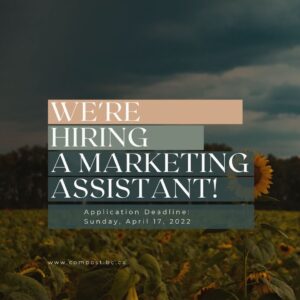
We’re Hiring: Marketing and Communications Assistant (Funding Dependent)

March 31, 2022


Please note: This position is dependent upon Canada Summer Jobs Funding.

The Compost Education Centre (CEC) is a charitable, not for profit organization that provides composting, organic gardening and conservation education to residents of the Capital Regional District (CRD).

Work Week:  The workweek is currently Wednesday-Saturday, 9:00am – 4:30pm, (30-hour per week with a paid 30-minute lunch break; 60 hr pay period).

Job Start Date: April 27, 2022, runs for 16 weeks.

Job End Date: August 14, 2022

A total of: 480 hours

Wage: $19.39 p/hr

For More Details, Click the Link Provided Below. 

Marketing and Communications Assistant Co-op Job Description 2022

Posted in Announcement, Blog, Featured, Job Posting, NewsTagged , , , ,

Food Security Connections Film

October 27, 2021


In 2021 the Food Security Connections Video came together as a collaborative project of the Food Literacy Working Group of the Good Food Network and the Capital Region Food and Agriculture Initiatives Roundtable (CRFAIR). This project was funded by an Island Health, Community Wellness Grant and supported by the Capital Region Food and Agriculture Initiatives Roundtable (CRFAIR).

The video is meant to spur dialogues and discussions around food insecurity, hear stories from people in our community and from individuals and organizations that are working to alleviate food insecurity through food justice efforts.

Video Production UATE Storied Learning | www.uatestories.com/

Locations in Video The Compost Education Centre www.compost.bc.ca

Victoria Native Friendship Centre www.vnfc.ca/

Saanich Neighbourhood Place www.saanichneighbourhoodplace.com/

Food Rescue Project of the Food Share Network(Capital Region) www.foodsharenetwork.com/-


To learn more about the Food Security Connections Video and it’s complimentary education package please visit www.crfair.ca

Posted in Announcement, Blog, Featured, Food Security, NewsTagged , , , Leave a Comment on Food Security Connections Film

Bees & Pollen with the GVPL

October 22, 2021


What’s all the buzz about bees? Join the Compost Education Centre and the Greater Victoria Public Library to learn about the importance of pollinators and discover little known facts about native bees and the integral role they play in our local ecosystem! We’ll chat about how you can help care for bees, and demonstrate a fun and simple way to make your yard and garden more bee friendly!

Posted in Blog, Featured, News, Partnerships, PollinatorsTagged , , , , Leave a Comment on Bees & Pollen with the GVPL

Frontiers for Young Minds

August 31, 2021


Hey everyone! This month I wanted to share a new resource with you that we’ve been super into lately at the CEC. Frontiers for Young Minds (https://kids.frontiersin.org/) is an “open access scientific journal written by scientists and reviewed by a board of kids and teens.” 

On their website you can find hundreds of articles on a wide variety of topics from soil health and ecology, sustainability, anatomy, chemistry, biology, human health and more. Peruse articles written specifically for youth that will challenge young learners with new concepts, words and ideas while maintaining accessibly with the option to hover over new concepts for definitions, lots of great images and glossaries.

This website is a cool source for scientific info for school projects, or just exploring and learning new information for kids ages ~12 and up! The accessible yet scientific language and cited content would also benefit highschool learners, or adults who are looking to learn something new!


As soil contamination is one of our focuses here at the CEC, this week I was excited to read their article “ How Soil Invertebrates Deal With Microplastic Contamination.” Check it out for a simple introduction to soil invertebrates with detailed images, and a quick breakdown of what they are, what they do, and how they interact with microplastics in our soil! There was lots of info in the article that was new to me, so I hope you can learn something new ? 


Posted in Announcement, Blog, FeaturedTagged , , , , , , , , Leave a Comment on Frontiers for Young Minds