Little Thai Place’s Food Waste Reduction Story

August 29, 2026
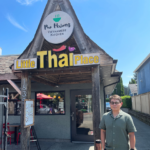

While pursuing his Master’s degree in Environment and Management at Royal Roads University (RRU), Paul Vaisayasakulkit, Director and Sustainability Lead at Little Thai Place, connected with the Compost Ed Centre’s Education Director, Kayla Siefried. Paul and his business partner at Little Thai Place had noticed rising food costs and associated expenses with disposing of food waste. Paul got some good ideas from Kayla, and he decided to focus his RRU Master’s capstone project on reducing food waste at Little Thai Place.

Paul found three categories of food waste at Little Thai Place: spoilage of ingredients, trimmings from food preparation, and customer waste. The majority of the restaurant’s food waste was from food preparation, and the biggest environmental impact in terms of greenhouse gas emissions was from any wasted meat. Paul surveyed customers, connected with staff, and talked to his business partner to identify solutions that have resulted in decreased food waste – and improved the restaurant’s bottom line. These practices include:

  • Encouraging customers to take their leftovers home and, where possible, bring their own reusable container.
  • Modifying food preparation techniques to minimize trimmings.
  • Using food trimmings in staff meals.
  • Separating organic waste in the kitchen from regular garbage pickup.

Our regional Landfill, Hartland, is filling up!

It’s set to be full by 2050, and the options for post-2050 are not perfect. Even though organics have been banned from the landfill since 2015, about 16.7% of the waste disposed of at the landfill is organic and it emits greenhouse gas.

In the CRD, restaurants are responsible for identifying, contracting with, and paying a private waste hauler to pick up organic waste to be composted. When restaurants hire private waste haulers, that material is transported to composting facilities as far away as Nanaimo. Restaurants are either producing greenhouse gas emissions by sending their organics to the landfill OR by paying to have them transported over the Malahat to be composted.

Imagine that instead of sending our organics our of the regions to be composted – we could instead have neighbourhood-level composting facilities that produce a soil amendment that can be used to enhanced soil quality in nearby community farms, gardens, and boulevards.

Solutions for Organic Waste

Individual Solutions

Bring your reusable container with you when you go out to eat. If there are ingredients and sides in a meal that you don’t like and won’t eat, communicate that to the server when you’re ordering. Learn more about the food waste practices at your favourite restaurants and support restaurants that are doing cool work.

Community Solutions

Get in touch to join us in advocating for comprehensive management of curbside organic pickup for restaurants across the region by a municipally-provided service.

Business Solutions

Thinking outside the box and getting creative around reducing organic food waste can help to improve your bottom line. Paul wants to help by sharing his methodology so get in touch to learn more!

Posted in Announcement, Blog, Civic Engagement, Composting, Featured, Food Security, Partnerships, Sustainability, Waste Diversion
Minimize Waste at Market Events

June 17, 2026


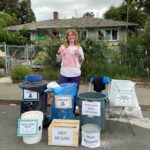
This document offers guidance on managing waste sustainably at farmers’ markets across British Columbia. It draws on the Compost Education Centre’s experience in waste management and reduction education at events, as well as research conducted through interviews with reusable dish program providers, market managers across BC, and two market managers in Ontario.

Posted in Announcement, Blog, News, Reports, Sustainability, Waste Diversion

New Composting Resources for Businesses

December 17, 2025


Here at the Compost Education Centre our education has mostly revolved around supporting residents of the Capital Regional District compost at home. And we have more expertise than that! Over the years we’ve offered informal business consultation, answering many questions from the public about composting at a workplace or at their business. We decided in 2025 to formalize some of this education by offering free “Composting and Food Waste Reduction for Businesses in the CRD” webinars and writing and publishing a free “Composting for Businesses” factsheet to add to our awesome list of other factsheets. Businesses in the Capital Regional District don’t have waste management services provided to them like some municipalities provide for single family dwellings (e.g. curbside garbage and organics collection) so a business is responsible for managing their own waste. Different businesses tackle this in different ways, and there are a few different options with different benefits and drawbacks. To try and provide an overview of possibilities and to provide some context for why waste management for businesses matters, we wrote this Factsheet. Check it out! And we’ve also scheduled a couple more “Composting and Food Waste Reduction for Businesses in the CRD” FREE webinars, so join us on Feb 4 or May 14. See you there.

Posted in Announcement, Blog, Composting, Fact Sheet, Waste Diversion

Composting Connections from Haida Gwaii

October 22, 2025


By Kayla

I recently had the valuable opportunity to see a medium scale community composting facility in operation in Old Masset on Haida Gwaii during a personal holiday. The community there has about 80 households filling 5-gallon buckets with food scraps from their kitchen, and then employees of the project pick up the bucket contents and bring them back to their EarthFlow composter – “an automated compost mixing and aeration system” inside a shipping container. Food waste is added to the shipping container, an auger breaks up and mixes the materials, automated irrigation can be toggled on and off depending on the moisture level of the feedstock, gases and emissions are captured in a biofilter before being released outside. While the community in Old Masset is still honing their process of storage, curing and use for the finished compost, they are excited that they are diverting a lot of waste from their landfill! Through this program they are building community, creating climate resilience as they process their own waste, creating a valuable soil amendment to nourish their sandy soils, and they are creating valuable employment opportunities for community members. I loved seeing this project in action and seeing Dave’s market garden where some of the finished compost is completing its curation phase.

Thank you so much to Calvin and Trudy and Filene from the Indigenous Zero Waste Technical Advisory Group for connecting me to Dave and for supporting such a great community scale composting operation in Old Masset. I’m very happy to hear that IZWTAG is also supporting many other composting systems of this scale across the province in different communities. Thank you to Dave for showing me around his market garden and garden scale composting operation and showing me the EarthFlow composter in action in Old Masset.

I feel so inspired to be connected to a wider community of people who care about stewarding the soil, reducing methane emissions from landfill, and building community resilience. Us compost keeners are everywhere 😉

Posted in Blog, Composting, Food Security, Reflections, Sustainability, Waste Diversion

Collaboration Spotlight: ReWood and the Compost Education Centre

January 6, 2024


ReWood is a volunteer-led social enterprise that aims to give old wood a second life by liberating lumber from building sites before it is transferred to the landfill. We have assembled a small but mighty volunteer team with the time, skills, and energy needed to design and custom-build strong and durable wooden infrastructure products for use in community gardens, small urban farms, nurseries, and related social enterprises.

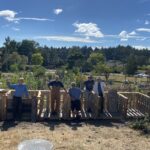
We connected with the Compost Education Centre in November. Within a week of our initial meeting, we were already at work: we delivered over 70-feet of freshly salvaged 2x4s for use in building support stands for the CEC’s in-classroom worm compost bins. We hope to collaborate further on projects of mutual interest where we can contribute to each other’s success.

[envira-gallery id=”9714″]

Two Challenges, One Solution

Through a FED Urban Agriculture-sponsored research project, Community Garden Guide, ReWood’s founders found many challenges confronting the establishment of community gardens. A key challenge was the ability to design, fund and build solid, common infrastructure like garden boxes, compost bins, and fencing. We found that wood costs alone accounted for roughly 25% of the build budget of the new Central Saanich Community Garden (CSCG).

At the same time, we were watching the demolishing of more and more residential properties in our neighbourhoods. Recent data from the Capital Regional District (CRD) estimate that unsorted wood accounts for almost 20% of total landfill-destined waste!

We saw two challenges that could be solved with one solution. Last year, we worked with the CRD and individual contractors to salvage wood from local demolitions including from the Capital Regional Housing Corporation project occurring adjacent to the Compost Education Centre’s site at 1216 North Park St. We diverted wood from the landfill to build garden boxes and compost bins designed by our volunteer team.

Waste Diversion Collaboration

Both ReWood and the CEC are grateful to be supported by the CRD’s Rethink Waste Grant. ReWood aims to divert wood from the landfill through direct projects, and the CEC seeks to divert organics from the landfill through education and research. It was awesome to find an opportunity to support our mutual goals. We’re interested in more future collaboration!

By Stuart Culbertson, volunteer lead at ReWood

Interested in getting involved? Contact us at rewoodvic@gmail.com if you would like more information about donating salvaged wood or sourcing reclaimed wood for a community garden or urban farm.


Posted in Blog, News, Partnerships, Waste DiversionTagged , , , , ,

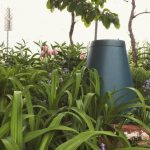
Last Chance Green Cone!

May 17, 2017


Due to manufacturing price increases, our Green Cone Digester price will rise on June 1st to $180.00. We currently have 20 Green Cones in stock at our old price, $165.00, or for members, $148.50 so get ’em while you can!

Thank you so much for your continued to support of the CEC and for your understanding, please feel free to email us at office@compost.bc.ca, if you have any questions.

Save

Posted in Announcement, Blog, Composting, News, Retail, Waste DiversionTagged , , , ,

Brand new factsheets!

March 16, 2016


We are excited to share two new factsheets with you!  We have been getting lots of inquiries about tumbler composters and bokashi and we decided to put together a factsheet for each one to help answer your questions and spark your interest.  If the descriptions below spark your interest, check out the new additions on our factsheets page.

bokashi

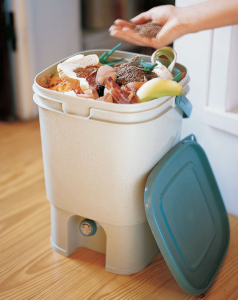
Bokashi is a Japanese term meaning “fermented organic matter”. Different from composting, which is aerobic, it is an anaerobic process that allows a person to deal with a wide variety of food waste on-site. Bokashi harnesses the power of effective microorganisms (EM) dehydrated onto a cereal base to carry out the fermentation process . It is best used as a partner to a compost pile, because you will need a place to compost the ‘spent’ material once it has finished going through the bokashi process. It is a great alternative to the green cone food digester as it breaks down the same types of materials but doesn’t need sunlight or to be buried down 2 feet in your garden work. You can make your own system or purchase a ready-to-use unit.


tumbler

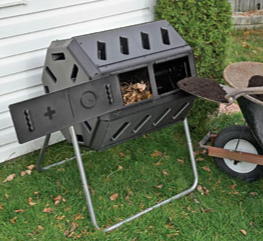
In general, tumbler composters are in the form of a barrel mounted on a stand so the unit can be turned or “tumbled” around a central axis.  They can be mounted horizontally or vertically, both work  well.  Turning these units easily incorporates air into the material inside the tumbler, which can speed up the decomposition process.  It is possible that you may get a finished product faster than with passive backyard composting due to the increased aeration that tumblers make possible.  However, beware of manufacturers that say you will have finished compost in three weeks or less – anything that looks finished in this short amount of time will be unstable and need to sit for at least 6-8 weeks longer to cure.


greenhouse

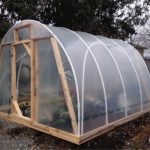
When we built our new greenhouse wanted the plans for this project to be free and readily accessible.  As such, this factsheet includes a budget and materials list for the greenhouse, a list of the lessons I learned, and some photos of the building process.


Posted in Blog, Composting, Fact Sheet, Featured, Organic Gardening, Waste DiversionTagged , , , , ,

Multi-Family Residential Composting Options

January 7, 2015


Looking for information about what the CRD kitchen scraps strategy means for your multi-family dwelling?  You’ve come to the right place!

Continue reading “Multi-Family Residential Composting Options” Posted in Announcement, Blog, Composting, Featured, News, Programs, Retail, Waste DiversionTagged , , , ,