Little Thai Place’s Food Waste Reduction Story
August 29, 2026
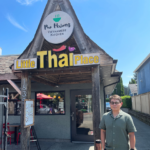
While pursuing his Master’s degree in Environment and Management at Royal Roads University (RRU), Paul Vaisayasakulkit, Director and Sustainability Lead at Little Thai Place, connected with the Compost Ed Centre’s Education Director, Kayla Siefried. Paul and his business partner at Little Thai Place had noticed rising food costs and associated expenses with disposing of food waste. Paul got some good ideas from Kayla, and he decided to focus his RRU Master’s capstone project on reducing food waste at Little Thai Place.
Paul found three categories of food waste at Little Thai Place: spoilage of ingredients, trimmings from food preparation, and customer waste. The majority of the restaurant’s food waste was from food preparation, and the biggest environmental impact in terms of greenhouse gas emissions was from any wasted meat. Paul surveyed customers, connected with staff, and talked to his business partner to identify solutions that have resulted in decreased food waste – and improved the restaurant’s bottom line. These practices include:
- Encouraging customers to take their leftovers home and, where possible, bring their own reusable container.
- Modifying food preparation techniques to minimize trimmings.
- Using food trimmings in staff meals.
- Separating organic waste in the kitchen from regular garbage pickup.
Our regional Landfill, Hartland, is filling up!
It’s set to be full by 2050, and the options for post-2050 are not perfect. Even though organics have been banned from the landfill since 2015, about 16.7% of the waste disposed of at the landfill is organic and it emits greenhouse gas.
In the CRD, restaurants are responsible for identifying, contracting with, and paying a private waste hauler to pick up organic waste to be composted. When restaurants hire private waste haulers, that material is transported to composting facilities as far away as Nanaimo. Restaurants are either producing greenhouse gas emissions by sending their organics to the landfill OR by paying to have them transported over the Malahat to be composted.
Imagine that instead of sending our organics our of the regions to be composted – we could instead have neighbourhood-level composting facilities that produce a soil amendment that can be used to enhanced soil quality in nearby community farms, gardens, and boulevards.
Solutions for Organic Waste
Individual Solutions
Bring your reusable container with you when you go out to eat. If there are ingredients and sides in a meal that you don’t like and won’t eat, communicate that to the server when you’re ordering. Learn more about the food waste practices at your favourite restaurants and support restaurants that are doing cool work.
Community Solutions
Get in touch to join us in advocating for comprehensive management of curbside organic pickup for restaurants across the region by a municipally-provided service.
Business Solutions
Thinking outside the box and getting creative around reducing organic food waste can help to improve your bottom line. Paul wants to help by sharing his methodology so get in touch to learn more!
Posted in Announcement, Blog, Civic Engagement, Composting, Featured, Food Security, Partnerships, Sustainability, Waste Diversion