Composable Cutlery Experiment

December 19, 2025


We here at the CEC are always down for an experiment! Recently, Kayla attempted to backyard compost take out cutlery from restaurants downtown. While these cutleries normally end up in green bins then industrial composting facilities (where they decompose more efficiently in oxygenated, high heat environments) we thought it would be interesting to see how much decomposition happens with these “compostable” items in a passive, backyard, cold compost system.

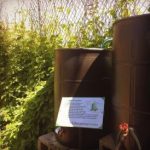
We tried composting a wooden fork and spoon, a hard paper fork with a coating from an unknown substance, and a hard “compostable” plastic fork. They were put in a tumbler composter with food scraps and yard waste from May to mid-November. The hard paper fork was the only piece to fully compost, but we still found remnants of its coating. The wooden cutlery was noticeably weaker, and the “compostable” plastic fork could have been washed and used to eat my lunch! Now, things might be different in an industrial composting facility, but compostable plastics are not an allowable feedstock (i.e. input material)  in BC…

Vancouver Island composting facilities, like one up in Cobble Hill – which receives most of the Capital regional districts green bin waste- is governed by the Ministry of Environment’s Organic Matter Recycling Regulations. In those regulations, compostable plastics are not an allowable feedstock (i.e. input material) and so Vancouver Island industrial composting facilities cannot accept compostable plastics. We’ve heard from regional industrial composting facilities that they’d prefer no compostable plastics be put into green bins because of this regulation, but also because their technology doesn’t quite allow for the full decomposition of the stuff – they end up sifting out partially decomposed / torn up compostable plastics that they then landfill.

There’s also an overlapping regulation here – the “Single Use and Plastic Waste Prevention Regulation” which provides a framework to phase out certain single-use and plastic items including compostable and biodegradable plastics. 

Lastly, plastic single use cutlery, including compostable plastic cutlery is banned under Federal regulations! Ack!

Mostly here at the CEC we really want to amplify the benefits of backyard composting – materials, nutrients and finished compost then stays in the region, and we create more closed look circularity in our food system. And sometimes the variety of products for take out and food storage can be very confusing! The very BEST option ever, is to skip any sort of single use thing – instead choose a reuseable! Bring your spork with you wherever you go, pack your to-go mug in your bag, and choose to dine in at restaurants or pick up your takeout from restaurants using programs like the bread-and-butter collective’s or Nulla’s reusable takeout container programs. If you’re keen to learn more about these topics you can sign up to participate in our Zero Waste Living workshop happening on February 21. And check out the CEC’s Understanding Compostable Plastics Factsheet, Zero Waste Living Factsheet, and the City of Victoria’s Sustainable Takeout Guide.

Posted in Blog, Composting, Fact Sheet

New Composting Resources for Businesses

December 17, 2025


Here at the Compost Education Centre our education has mostly revolved around supporting residents of the Capital Regional District compost at home. And we have more expertise than that! Over the years we’ve offered informal business consultation, answering many questions from the public about composting at a workplace or at their business. We decided in 2025 to formalize some of this education by offering free “Composting and Food Waste Reduction for Businesses in the CRD” webinars and writing and publishing a free “Composting for Businesses” factsheet to add to our awesome list of other factsheets. Businesses in the Capital Regional District don’t have waste management services provided to them like some municipalities provide for single family dwellings (e.g. curbside garbage and organics collection) so a business is responsible for managing their own waste. Different businesses tackle this in different ways, and there are a few different options with different benefits and drawbacks. To try and provide an overview of possibilities and to provide some context for why waste management for businesses matters, we wrote this Factsheet. Check it out! And we’ve also scheduled a couple more “Composting and Food Waste Reduction for Businesses in the CRD” FREE webinars, so join us on Feb 4 or May 14. See you there.

Posted in Announcement, Blog, Composting, Fact Sheet, Waste Diversion

Updates from an Amateur Gardener, Pt. 1

April 10, 2024


I feel like I’ve won the lottery! A few weeks ago, I got an email from the Oswald Park Community Garden letting me know that there was a garden plot for me. How exciting! 

I live in a third-storey apartment with a very small balcony that doesn’t get a lot of light. I worked from home during the pandemic, and like many people, I got very into my houseplants. I did what I could with the balcony (and I confess I’ve killed a lot of plants). But after working for the Compost Education Centre amidst a beautiful demonstration site (come visit anytime!) for a couple months, I started to hanker for something more. The reasons to grow your own food are extensive. It increases your personal physical and mental health, leads to greater food security, and creates community. I think I also wanted to make the work I do a bit more tangible. As Executive Director, I do a lot of sitting at my computer and in meetings thinking and talking and writing about composting, circular food systems, and community resilience. I love it, but it can feel a bit abstract. I guess I want to make and use some compost with my hands instead of my words. 

I went down a bit of a rabbit hole trying to get my apartment building to okay me starting a boulevard garden, and I received a hard no from the building’s strata council. I put my name on some community garden waitlists, and I daydreamed about starting a guerilla garden somewhere on a piece of neglected land by our apartment. My partner and I talked about housing prices and whether we’d ever want to move out of our cozy apartment to somewhere with a yard. It didn’t feel like my energy was going anywhere. So when the message from Oswald Park Community Garden popped into my email inbox, it felt like a ray of sunshine on a grim late February day. It felt like the promise of spring warmth and long summer days. It felt like I had a place to put my energy. 

I’ve started polling folks for advice, and I have to admit my recent Google search looks something like “first year community garden plot help.” If I had known a few months ago that I was going to have a garden plot, I probably would have registered for Kayla’s “Grow the Best Garden: 5-Part Workshop Series.” Kayla is the CEC’s Site Manager and Community Education Coordinator, and one person who attended her workshops described her as their “invaluable gardening mentor guiding [them] through this journey with unwavering expertise and passion.” I’ve already missed the first two workshops of the series so I’m following the advice of one Redditor to “be patient, be prepare to fail, and be happy to start again.” I’m also asking Kayla for advice on our lunch breaks, and I’m poring over the CEC’s extensive factsheets. 

Stay tuned here for more updates! 

Posted in Adult Education, Blog, Fact Sheet, Featured, ReflectionsTagged , , , , , ,

New Factsheet! #24: Grow Your Own Food

March 4, 2023


This new factsheet will walk you through: How to build the best soil;  what time and money you’ll need; easy & productive plants to grow; and how to care for your plants throughout the growing season.

All factsheets are free on our website and onsite thanks to funding provided by the CRD.


Click here to read the factsheet

Posted in Announcement, Blog, Fact Sheet, Food Security, Organic GardeningTagged , , ,

*New* Factsheet #19 Bioremediation for Urban Gardeners

September 23, 2020


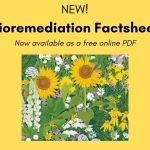
We are thrilled to announce the launch of our new factsheet: #19 Bioremediation for Urban Gardeners, written by soil toxicologist and HCS program creator Danielle Stevenson, as part of our Healing City Soils project!
This factsheet is an introduction to beginner-level phyto (plant) remediation in soils that are contaminated with low-to-moderate levels of heavy metals. By working with native and non-native plants phyto-remediation is a process that slowly extracts heavy metal contaminants from soil. The factsheet is available for free online at our website: https://compost.bc.ca/…/09/19-Bioremediation_no-image.pdf
Bioremediation for Urban Gardeners is the third factsheet in the CEC’s factsheet series all about soil health and best practices if higher-than-normal levels of heavy metals are detected in your soil. If you’re interested in diving in, we recommend that you start with Factsheets #11 and #12, which introduce you to soil contamination and best practices for growing food in urban spaces.
The beautiful image pictured is snip of our ‘Hyperaccumulator’ poster created by local artist Natassia Davies (@ natassiaashley on Instagram), which will soon be available for sale at the CEC- stay tuned!
Posted in Blog, Fact Sheet, NewsTagged , , ,

Factsheet #18: Vermin Resistance

December 7, 2017


Factsheet #18: Vermin Resistance

Posted in Announcement, Blog, Fact Sheet, Featured, NewsTagged , , , ,

New Factsheet: #16, Rainwater Harvesting

May 5, 2017


Spring is the perfect time to be thinking about the best ways to conserve water for the dry summer months. To assist you in ideas around how to construct efficient systems that store our abundance of spring and fall rain, the CEC has created a new factsheet that spans a range of rainwater harvesting systems, from cisterns, to rain gardens, to bioswales. #16 Rainwater Harvesting Factsheet

Posted in Announcement, Blog, Fact Sheet, FeaturedTagged , , , ,

New Healing City Soils Factsheets

September 28, 2016


HealingCitySoils_Logo

The Healing City Soils project has been completed for 2016! Almost 140 soil samples were tested in Victoria and Esquimalt through this joint project with Royal Roads University and the results made into an interactive map (coming soon!) to inform the community about potential for soil contamination and best practices for growing healthy produce in back and front yards and boulevards.

As well, we are thrilled to announce that two of our new factsheets from the Healing City Soils project are now complete.  These factsheets will help urban gardeners learn more about soil contamination and protect their health while growing their own groceries.

Soil Contamination:  Whether you are already growing food or would like to begin a garden, it’s a good idea to learn more about your soil so that you can grow food safely. Urban soils are often compacted and nutrient deficient, and can sometimes contain heavy metals and other contaminants as a result of historical industrial activity, past and present land use and proximity to pollution sources (e.g. a major road). Soil contaminants may get into or onto our veggies and fruits and have negative health effects over the long term. Gardeners can take many simple and inexpensive actions to reduce their exposure to urban soil contaminants. Soils can be managed, improved and made healthy again so that you and your garden can thrive.  Find the factsheet here.

Best Practices for Healthy Urban Gardens:  We recommend that all gardeners follow healthy gardening practices to help reduce exposure to heavy metals and other contaminants. Generally, maintaining a neutral soil pH, adding organic matter and compost to your soil, mulching your garden soil and thoroughly washing your garden produce can reduce your exposure to many soil contaminants so you can enjoy the many health benefits of eating fresh garden-grown fruits and vegetables. Find the factsheet here.

Save

Save

Posted in Announcement, Blog, Fact Sheet, Featured, Healing City Soils, NewsTagged , , ,

Brand new factsheets!

March 16, 2016


We are excited to share two new factsheets with you!  We have been getting lots of inquiries about tumbler composters and bokashi and we decided to put together a factsheet for each one to help answer your questions and spark your interest.  If the descriptions below spark your interest, check out the new additions on our factsheets page.

bokashi

Bokashi is a Japanese term meaning “fermented organic matter”. Different from composting, which is aerobic, it is an anaerobic process that allows a person to deal with a wide variety of food waste on-site. Bokashi harnesses the power of effective microorganisms (EM) dehydrated onto a cereal base to carry out the fermentation process . It is best used as a partner to a compost pile, because you will need a place to compost the ‘spent’ material once it has finished going through the bokashi process. It is a great alternative to the green cone food digester as it breaks down the same types of materials but doesn’t need sunlight or to be buried down 2 feet in your garden work. You can make your own system or purchase a ready-to-use unit.


tumbler

In general, tumbler composters are in the form of a barrel mounted on a stand so the unit can be turned or “tumbled” around a central axis.  They can be mounted horizontally or vertically, both work  well.  Turning these units easily incorporates air into the material inside the tumbler, which can speed up the decomposition process.  It is possible that you may get a finished product faster than with passive backyard composting due to the increased aeration that tumblers make possible.  However, beware of manufacturers that say you will have finished compost in three weeks or less – anything that looks finished in this short amount of time will be unstable and need to sit for at least 6-8 weeks longer to cure.


greenhouse

When we built our new greenhouse wanted the plans for this project to be free and readily accessible.  As such, this factsheet includes a budget and materials list for the greenhouse, a list of the lessons I learned, and some photos of the building process.


Posted in Blog, Composting, Fact Sheet, Featured, Organic Gardening, Waste DiversionTagged , , , , ,