Meet Emily!

July 4, 2024


Hi everyone!

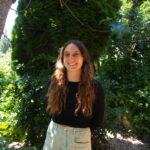
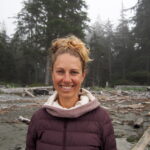
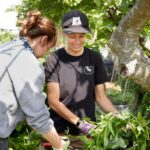
My name is Emily, I’m the new Child and Youth Education Assistant at the CEC, and I’m very excited to be working here for the summer! While originally from the territories of the Anishinaabe Mississauga peoples out East, I have been living on these lands for the past 7 years. As a graduate from the Geography and Indigenous Studies departments at UVic, my experience and interests lie primarily in community-based research, environmental education, and climate justice.

My interest in working with the CEC came from a passion for projects that help support healthy and reciprocal relationships to the land, as well as instilling these values in the hearts and minds of our society’s youngest members.

In my free time you’ll find me gardening, climbing, practicing my Spanish, and trying to entertain my very needy cat. Besides helping with the Child and Youth Education Program, I’ll be spending my time with Zoe-Blue working on some fun communications materials. Come find me in the office and garden; I love a good chat, especially when it’s about Native plants!

Posted in Announcement, Blog, Child and Youth Education, News, StaffTagged ,

Garden Plot Plan

May 14, 2024


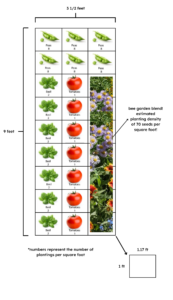
Because I won’t have the plot until the end of the March at the earliest, it’s my plan to focus on summer crops to start. I’m trying to choose vegetables based on what I like to eat (duh), how easy they are to grow, and what people have suggested. So far I have: tomatoes, basil, and sweet peas. Ooh and I definitely want to grow some happy flowers for some happy pollinators.

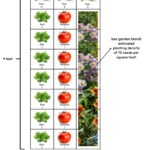
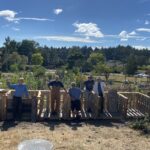
The garden plots at Oswald Park are not big, which I think will be great for a novice gardener like me. I don’t really know what I’m doing and I tend to fill my summers with activities. The thought of having a relatively small space in which to mess up in sounds just about right. I took a look at the “square foot garden plan guide,” which shows how many plantings to do per square foot. This is what the current plot map looks like:

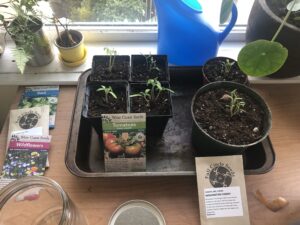
Most of the plants above can be direct sown, but the tomatoes need to be started early. I had a few seeds left over from a failed balcony container gardening experiment a few summers ago, and I bought a seed packet from the CEC, too.

I’m planning on traveling for a two week span over the summer so I’m also thinking ahead to watering needs. At the Victoria Seedy Sunday, I met the folks from Mayne Island Clay Works. They make these beautiful “ollas,” which are designed to buried in the ground and filled with water that is then slowly released to surrounding plants. We have one in the CEC retail space right now, and I’m kinda obsessed. I sent them an email, and they’ll bring one down to Victoria the next time they’re here doing deliveries. I’ve got this wild idea that I can dilute the Bokashi liquid in the olla for my fertilizer and irrigation needs. Stay tuned.

Next Steps

And we’re rolling, people! I’ll be keeping an eye on my tomato starts, drinking coffee for the Bokashi bran, making the Bokashi bran, and planning my planting dates for my other vegetables. Check back in a few weeks to hear how I’m doing!

Posted in Blog, News, Organic GardeningTagged , , , ,

Spring Plant Sale happening soon!

April 19, 2024
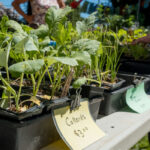

The Compost Education Centre (CEC) is hosting our annual all-organic May plant sale! May 11th, 2024 10AM-2PM

The plant sale will take place in Haegert Park (1202 Yukon St.) one block from our site on North Park street. Bring a blanket or a picnic so you can enjoy the music in the shade of the giant Sequoia tree. Entry by donation or free for CEC members. Dogs welcome.

The Spring Organic Plant Sale features local farmers offering a wide variety of organically grown vegetable, flower and herb seedlings to get you off to a successful start this growing season.

There will also be a Parent-Child workshop taking place during the sale, from 11:00am-12:00pm so bring the whole family!

What you can look forward to:

• The largest selection of organically grown heirloom tomato varieties all in one place for easy shopping

• Organically grown vegetable starts from arugula to zucchini

• Native plants for your low maintenance garden

• Perennial edibles like berry bushes and other fruiting shrubs

• Medicinal herbs like English lavender, chamomile and yarrow

• Culinary herbs like Genovese basil, dill and chives

• Companion plants like marigolds, sweet cicely and comfrey

• Live bicycle powered music!

The Compost Education Centre is located on unceded and occupied Indigenous territories, specifically the land of the Lekwungen speaking people—the Esquimalt and Songhees Nations. These nations are two of many, made up of individuals who have lived within the porous boundaries of what is considered Coast Salish, Nuu-Chah-Nulth and Kwakwa’wakw Territory (Vancouver Island) since time immemorial. At the CEC we seek to respect, honour and continually grow our own understandings of Indigenous rights and history, and to fulfill our responsibilities as settlers, who live and work directly with the land and its complex, vital ecologies and our diverse, evolving communities.

Compost Education Centre memberships get you free workshops, discounts at garden centres around town and more great perks! Sign up or learn more on our website.

Accessibility Information

The sale will be happening in Haegert park which is grassy and slightly sloped, there are curb cuts at various entrance points to get into the park.

Visitors can park at the Vic High parking lot between Gladstone Avenue and Grant St. The parking lot is a 200m walk from Haegert Park.

Posted in Announcement, Blog, Events, News, Organic GardeningTagged , , , , , ,

We’re hiring a Site Assistant!

April 10, 2024


The Site Assistant reports to the Site Manager. The Site Assistant is responsible for the garden stewardship at the CEC’s demonstration gardens and various other urban gardens in the Victoria area in partnership with the CEC’s Site Manager as well as the coordination of the volunteer program across the organization.

Applications due May 26th

Interested in Applying? Click here

Posted in Announcement, Blog, Job Posting, NewsTagged , ,

The Dr. Wriggles Annual Update

January 8, 2024


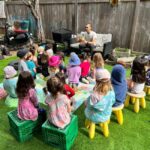
The Compost Education Centre connects with and positively impacts children and youth in our region. A recent study published by the Capital Regional District reports that 56% of grade 7-12 youth in the region don’t feel connected to land and nature. This disconnect is representative of how many children and youth of all ages feel. Elora Adamson, the Child and Youth Education Program Manager, and Jeffrey Ellom, the Child and Youth Education Program Coordinator, address this disconnect by providing accessible and inclusive education.

Over the past year, Elora and Jeffrey have delivered 286 in-person educational workshops featuring soil science, food waste reduction and diversion, resource conservation, and composting to 4552 students and 789 adults. Elora and Jeffrey create and deliver workshop content that’s tied into British Columbia’s provincial science and social studies curriculum on topics including energy transfer, organism life cycles, chemical and physical changes, and sustainable practices. At the same time, Elora and Jeffrey connect students to the natural processes in their own neighborhoods rather than educating about nature in the abstract. To best help students engage with big ideas like climate change, our programs are regionally specific, solution-driven, and hands-on.

[envira-gallery id=”9721″]

One workshop participant shared that “staff and children greatly enjoyed this workshop. They enjoyed the puppets and the storytelling. Many of the children were telling their parents about what they learned when they arrived at a pick up time. Even a week later, some of the children are still talking about how pollinators are helping our gardens.”

Elora and Jeffrey build and maintain relationships with teachers, administrators, and education organizations throughout the CRD. To ensure cost is never a barrier, we offer free or discounted workshops to under-resourced classrooms. We have also had success adapting workshops to a variety of student access needs whether physical, behavioral, social, linguistic, or developmental. We also email teachers after workshops to invite feedback. To maintain accessibility to underserved rural communities, we bring workshops to any location in the CRD at no additional travel cost. Our aim is to reduce as many barriers to engaging and nature-based education as possible.

We are able to provide this low-barrier education with the support of donors and funders. We are grateful to the Rotary Club of Victoria for supporting our 2024 children and youth educational programming.

Claire Remington, Executive Director

Do you love Dr. Wriggles, too? Become a member today to continue supporting our programming in 2024 and beyond!
Posted in Announcement, Blog, Child and Youth Education, News, ProgramsTagged , ,

Collaboration Spotlight: ReWood and the Compost Education Centre

January 6, 2024


ReWood is a volunteer-led social enterprise that aims to give old wood a second life by liberating lumber from building sites before it is transferred to the landfill. We have assembled a small but mighty volunteer team with the time, skills, and energy needed to design and custom-build strong and durable wooden infrastructure products for use in community gardens, small urban farms, nurseries, and related social enterprises.

We connected with the Compost Education Centre in November. Within a week of our initial meeting, we were already at work: we delivered over 70-feet of freshly salvaged 2x4s for use in building support stands for the CEC’s in-classroom worm compost bins. We hope to collaborate further on projects of mutual interest where we can contribute to each other’s success.

[envira-gallery id=”9714″]

Two Challenges, One Solution

Through a FED Urban Agriculture-sponsored research project, Community Garden Guide, ReWood’s founders found many challenges confronting the establishment of community gardens. A key challenge was the ability to design, fund and build solid, common infrastructure like garden boxes, compost bins, and fencing. We found that wood costs alone accounted for roughly 25% of the build budget of the new Central Saanich Community Garden (CSCG).

At the same time, we were watching the demolishing of more and more residential properties in our neighbourhoods. Recent data from the Capital Regional District (CRD) estimate that unsorted wood accounts for almost 20% of total landfill-destined waste!

We saw two challenges that could be solved with one solution. Last year, we worked with the CRD and individual contractors to salvage wood from local demolitions including from the Capital Regional Housing Corporation project occurring adjacent to the Compost Education Centre’s site at 1216 North Park St. We diverted wood from the landfill to build garden boxes and compost bins designed by our volunteer team.

Waste Diversion Collaboration

Both ReWood and the CEC are grateful to be supported by the CRD’s Rethink Waste Grant. ReWood aims to divert wood from the landfill through direct projects, and the CEC seeks to divert organics from the landfill through education and research. It was awesome to find an opportunity to support our mutual goals. We’re interested in more future collaboration!

By Stuart Culbertson, volunteer lead at ReWood

Interested in getting involved? Contact us at rewoodvic@gmail.com if you would like more information about donating salvaged wood or sourcing reclaimed wood for a community garden or urban farm.


Posted in Blog, News, Partnerships, Waste DiversionTagged , , , , ,

Soaking Up Natural Dyes

January 4, 2024


In September, I attended a natural dyeing at the Yates Street Community Garden led by Angie Choly.  

I attended the workshop in hopes of learning some strategies for dyeing with natural material to bring to the high school gardens I teach in. The method we used was called bundle dyeing, and it was fun, effective, and quite simple!

The part of natural dyeing that always intimidates me is the mordanting process, which is essentially a way to pre-treat your fabric to make it more receptive to the dye and improve the stability of the colour in the finished product. Angie mordanted the fabrics for us using potassium aluminium sulfate, rinsed them and cured them in the fridge and brought them to us ready to go. I’ll have to get some practice mordanting on my own soon! 

[envira-gallery id=”9707″]

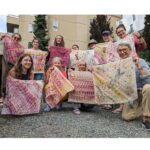
After learning a little bit about other natural dyeing strategies, we got into our bundle dyeing process to create bandanas. We had all sorts of natural materials to choose from for our dyes. We used flowers including mallow, scabiosa, hollyhock, pansies, cosmos, zinnia, and more. We also used kitchen scraps including onion skins, turmeric, hibiscus coffee, cabbage, and berries.

I ended up using a lot of flowers, but I was really excited about the potential of dyeing using food scraps with high school students as it ties into our chats about compost and redefining what we consider waste so perfectly. And as a bonus? Food waste is a material that is so easy to access.

The bundle dyeing process itself is simple. It involves laying down all your materials on the bandana, and then rolling it up tightly in the way you’d roll a rug. If you fold it in half first, either rectangular or corner to corner you get a sort of mirror effect in the way the colour comes out (which is cool!). After that, you roll up your fabric into a spiral and tied tightly. The last step is steaming the piece the same way you’d steam a vegetable in the kitchen. We steamed our bandanas for about 30 minutes – you can see the results in the photos!

Interested in chatting with Elora about running a workshop with a group of students? Check out our offerings here.

This was such a fun way to engage with plants (that you can find in gardens, along boulevards, in sidewalk cracks, and other urban areas) as well as food scraps in a new way.

It can be difficult to find the time to pursue professional development and skill-building while also working as an educator with a busy teaching schedule. I was grateful to the Compost Ed Centre for making it possible, and I’m looking forward to integrating what I’ve learned into my teaching.

Thank you to the Yates Street Community Garden and Angie for hosting!

Support us by becoming a monthly donor today!

By Elora Adamson, Child & Youth Education Coordinator

Posted in Blog, News, Reflections, SustainabilityTagged , , , , ,

Kayla Siefried, a finalist for Charity Village Award

December 6, 2023


Our Site Manager and Community Education Coordinator, Kayla Siefried was a top finalist for the Charity Village awards, in the category of Most Outstanding Individual Impact. 

As an expert educator and ground leader, Kayla teaches others to do as she says and what she does. In her time at the CEC she has taught 946 workshops to 16,127 childen, youth, and adults on topics related to composting, food preservation, and gardening.

When asked to describe his experience learning from Kyla, a former workshop attendee wrote:

“For the past two years, Kayla has been my invaluable gardening mentor, guiding me through this journey with unwavering expertise and passion. Her exceptional communication skills have not only helped me immensely but have also benefited our entire class. I owe her a profound debt of gratitude, as there’s no one I’ve learned more from about gardening than her.”

We are grateful to have Kayla on staff at the Compost Education Centre.

By Zoe-Blue Coates, Office Manager and Communications Coordinator

Posted in Accolades, Announcement, Blog, News, StaffTagged , ,

Strategic Planning Updates

December 1, 2023


I joined the Compost Ed Centre as Executive Director in February 2023, and I’m constantly learning about who we are and what we do. Let me begin by saying that I am so grateful to work with Elora, Jeffrey, Kayla, and Zoe-Blue. Earlier this year in anticipation of our strategic planning, we sent out a survey to gather data from our community as to what they view as the Compost Ed Centre’s strengths and what they might want us to do differently in the next three to five years. Consistently, the responses highlighted knowledgeable, engaging, and passionate staff as our core strength. And for the future? For us to keep doing what we have been doing – and possibly some expansion!? The responses highlighted for me how well-established and well-loved the Compost Ed Centre is after 30 years of operation.


We want to share our many thanks to everyone who filled out a survey! We compiled the responses into a short PowerPoint to provide some context to our strategic planning.


What has resonated for me most in this role and what we have learned from you all is how the Compost Ed Centre creates impact through education and research. On one level, we transfer technical skills that empower workshop participants, site volunteers, university students, and schoolkids to take on climate mitigation and adaptation action. But on another – and more profound – level, we integrate folks into our community of plants and people. The Compost Ed Centre cultivates an increased sense of connectivity and reciprocity, and we do it by sharing knowledge in a welcoming way.

I can speak personally to how welcomed I have felt to this role and to the Compost Ed Centre’s community. I want to highlight how fortunate I’ve been to work with Alexis so much over the past few months as she has transitioned out of the Executive Director role. The pandemic and post-pandemic inflation has hit nonprofits hard, but Alexis’s steady and wise tenure as Executive Director made it possible for me to step into this role with a confident rather than crisis mindset. Amidst so much change in the world, I feel reassured that the Compost Ed Centre will continue to thrive in the same way for the next 30 years by catching and mixing folks right on into our community – just like the browns and greens in a hot compost pile.

Haven’t yet hopped into the hot compost pile?

Become a member of our community today!

We want to express our gratitude to the Government of Canada’s Community Service Recovery Fund, which has made our strategic planning work possible. The Community Services Recovery Fund is a one-time $400 million investment from the Government of Canada to support community service organizations, including charities, non-profits and Indigenous governing bodies, as they adapt and modernize their organizations. We have been able to engage in the staff retreat and other strategic planning activities with the support of the CSRF.

By Claire Remington, Executive Director


Posted in Announcement, Blog, Board, News, Reflections, Stategic PlanningTagged

Victoria’s Vital Signs Report

October 12, 2023


Vital signs is a check-up that measures vitality of a region, identifies concerns, and supports action on issues that are important for our quality of life. Each year the Victoria Foundation shares this check-up in a report. This year, the Compost Education Centre is featured in the Environmental Sustainability section.

Read the report


Posted in Announcement, Annual Report, Blog, News, SustainabilityTagged ,