This past week the Compost Ed Centre took a little day trip to Mayne Island to teach the folks there all about some advanced composting methods. We gathered in the old Ag Hall and had a wondrous two hours of composting queries, information exchange, homemade lemon cake and strong cups of tea! Vicki of the Mayne Island Recycling Society showed me the Mayne Island community garden, and I thought we could all take a page or two from their book. Scroll on down to learn more (click on the pictures to enlarge)!
Awesome poster!
The guardian at the gate of the Mayne Island Community Gardens
Beautiful plots!
Their passively managed 3-bin composting system. After attending the workshop, Vicki was inspired to try building a hot compost in the fall!
Golden Rules
What that compost helps to grow!
Garden candy
To make the gardeners’ experience even more meditative…
Amazing rainwater catchment system! 10 cisterns, all fundraised for, capture water off the metal roof of the nearby community centre.
Rainwater use is volunteer-managed. The cisterns’ water level is monitored and a weekly “fair water distribution” amount is determined, measured in easily-counted watering cans.
Creative container
We couldn’t agree more with what the sign says!
A huge thanks to Mayne Island for hosting and inspiring us, we look forward to more trips around the southern Gulf Islands, spreading the compost word!
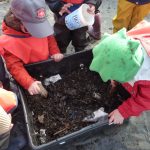
The list to the left has been living on my bulletin board for a few months and seeing it makes me smile every day. It’s from a student in a grade 3 class at St Patrick’s Elementary who was excited to help harvest his classroom worm compost bin but who wasn’t completely enthusiastic about touching the worms and finished compost. He put himself in charge of documenting all the organisms found in the worm bin and thoughtfully made me a copy of his list to take with me.
There are lots of reasons I get nerdily excited about worm composting (such as the beautiful finished product and how little time it takes for the worms to make it), but the most compelling one has to be what a great experience a classroom worm bin is for kids. It is a little ecosystem tucked away in the class, it lets kids see and participate in the entire compost cycle, and it gets them into the habit of integrating positive environmental change into their daily routine. Plus, it gives them an excuse to dig around in the dirt!