Celia’s Research

January 1, 2026


As some folks may know from our newsletter, alongside my role as the Summer Site Assistant, I have been carrying out my research at the Compost Education Centre (CEC) for my master’s degree in environmental studies.  

Several years ago, I became involved as a volunteer as the CEC, first working in the gardens with Kayla, then monitoring and processing samples for the Healing City Soils program, and have helped with various office tasks and fact sheet development. I also had the opportunity the last few summers to work paid positions in the garden. Through this work, I became curious about how people feel connected to the environments around them, and what role an organization like the CEC might play in supporting this. By connection, I mean connection to other people, community, plants, animals, and the land. For myself, my involvement has cultivated great relationships, made me think about urban food production, urban habitat creation, interaction with animals and soil – and the importance of composting in all these areas. 

Planting seeds in the Demonstration Gardens

Because of this curiosity, and with the approval of the folks at the CEC, I decided my research would involve interviewing those involved with the organization in various roles.  

The CEC does work that is very particular to this region (although it could be applied elsewhere if adapted), and for that reason it can be considered “place-based”. To me, this concept of “place” is the main question of my research, and I really wanted to explore what place, in relation to the work and physical space of the CEC, means to those involved, and how it might impact them in various ways.  

It is very important to note that a lot of the concepts, like “relations” and “place-based knowledge”, I am exploring come from Indigenous ways of knowing and being and have come to be recognized by Western academia through the work of Indigenous scholars. As a settler, it is important that I recognize where these thoughts come from and acknowledge they are not my own, and conduct my research in ways that challenge Western worldviews. 

My hopes in doing this research are to learn a bit more about the following:  

  • How do people involved with the CEC’s work understand and experience “place”? 
  • How does the experience of “place” that folks might have at the CEC impact individual relationships, experiences, attitudes and actions? 
  • Why might the cultivation of “place” be important to organizations like the CEC? 

Over the summer and fall of this year, I have been given the amazing opportunity to interview ~15 people involved with the CEC, who graciously shared some of their experiences with me. My goal in doing this research is of course to learn, but mainly, to offer the CEC some data about what they are doing and offer a few insights into how they might move forward in the future in ways that create meaningful relationships amongst people, nonhumans, and the land. To me, research is a way of communicating what is already happening within the community, and hopefully, do justice to the voices and stories that were shared with me.  

Stay tuned for an update next year, as I am currently headed into my data analysis phase. 😊  

Posted in Blog, Civic Engagement, Reflections, Staff, Stategic Planning, Sustainability, Volunteer

Composting Connections from Haida Gwaii

October 22, 2025


By Kayla

I recently had the valuable opportunity to see a medium scale community composting facility in operation in Old Masset on Haida Gwaii during a personal holiday. The community there has about 80 households filling 5-gallon buckets with food scraps from their kitchen, and then employees of the project pick up the bucket contents and bring them back to their EarthFlow composter – “an automated compost mixing and aeration system” inside a shipping container. Food waste is added to the shipping container, an auger breaks up and mixes the materials, automated irrigation can be toggled on and off depending on the moisture level of the feedstock, gases and emissions are captured in a biofilter before being released outside. While the community in Old Masset is still honing their process of storage, curing and use for the finished compost, they are excited that they are diverting a lot of waste from their landfill! Through this program they are building community, creating climate resilience as they process their own waste, creating a valuable soil amendment to nourish their sandy soils, and they are creating valuable employment opportunities for community members. I loved seeing this project in action and seeing Dave’s market garden where some of the finished compost is completing its curation phase.

Thank you so much to Calvin and Trudy and Filene from the Indigenous Zero Waste Technical Advisory Group for connecting me to Dave and for supporting such a great community scale composting operation in Old Masset. I’m very happy to hear that IZWTAG is also supporting many other composting systems of this scale across the province in different communities. Thank you to Dave for showing me around his market garden and garden scale composting operation and showing me the EarthFlow composter in action in Old Masset.

I feel so inspired to be connected to a wider community of people who care about stewarding the soil, reducing methane emissions from landfill, and building community resilience. Us compost keeners are everywhere 😉

Posted in Blog, Composting, Food Security, Reflections, Sustainability, Waste Diversion

Soaking Up Natural Dyes

January 4, 2024


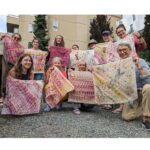
In September, I attended a natural dyeing at the Yates Street Community Garden led by Angie Choly.  

I attended the workshop in hopes of learning some strategies for dyeing with natural material to bring to the high school gardens I teach in. The method we used was called bundle dyeing, and it was fun, effective, and quite simple!

The part of natural dyeing that always intimidates me is the mordanting process, which is essentially a way to pre-treat your fabric to make it more receptive to the dye and improve the stability of the colour in the finished product. Angie mordanted the fabrics for us using potassium aluminium sulfate, rinsed them and cured them in the fridge and brought them to us ready to go. I’ll have to get some practice mordanting on my own soon! 

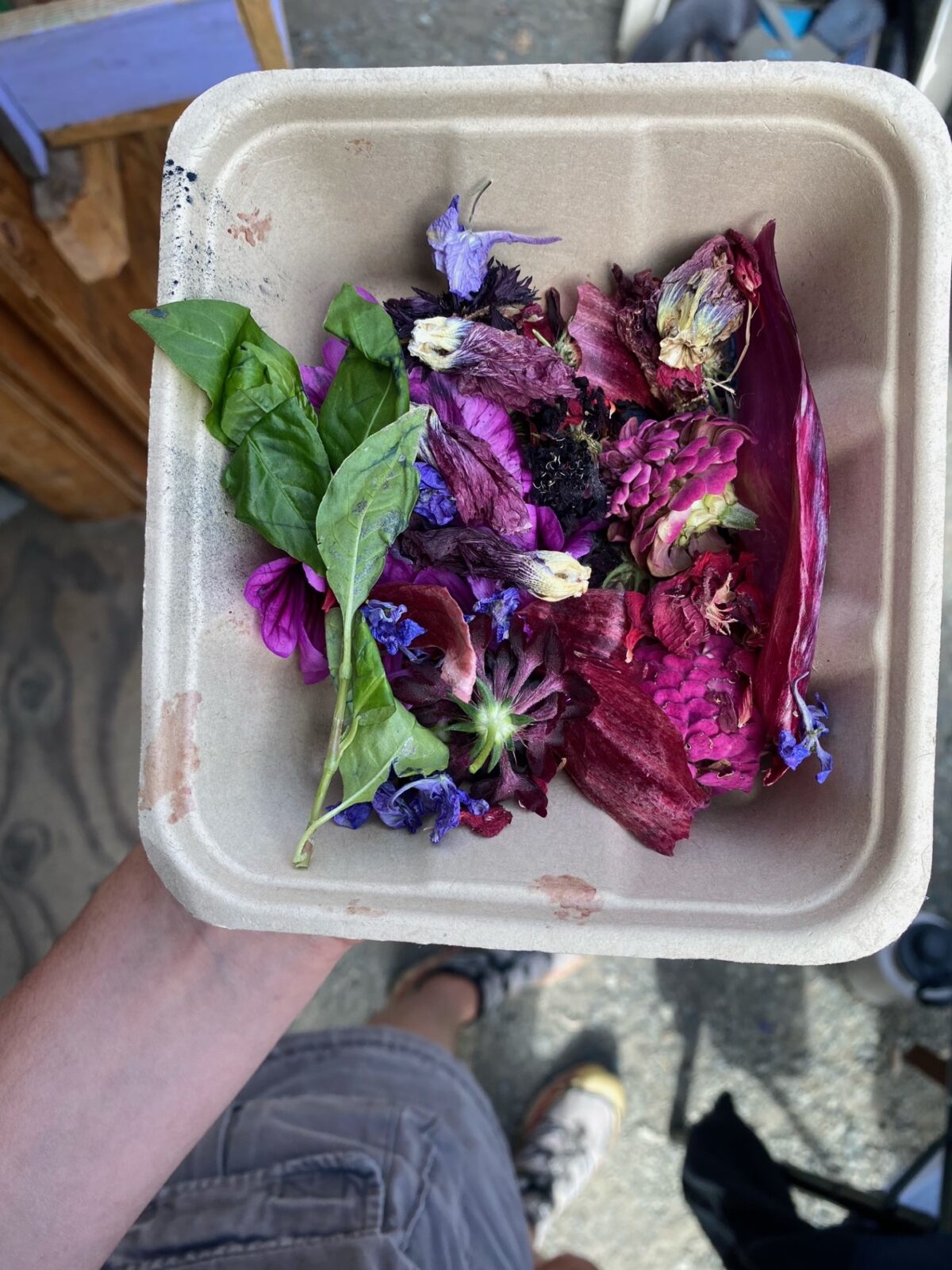
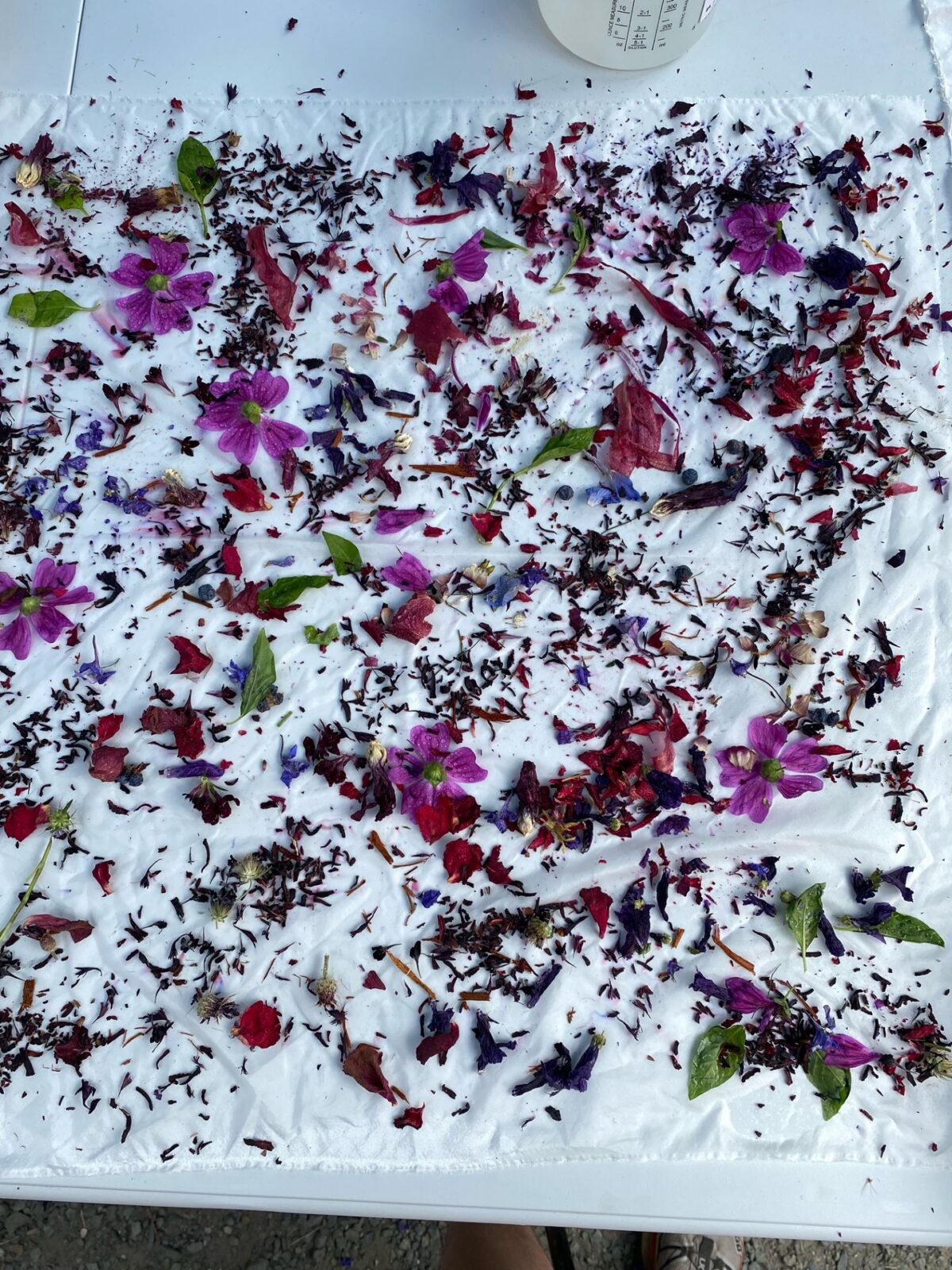
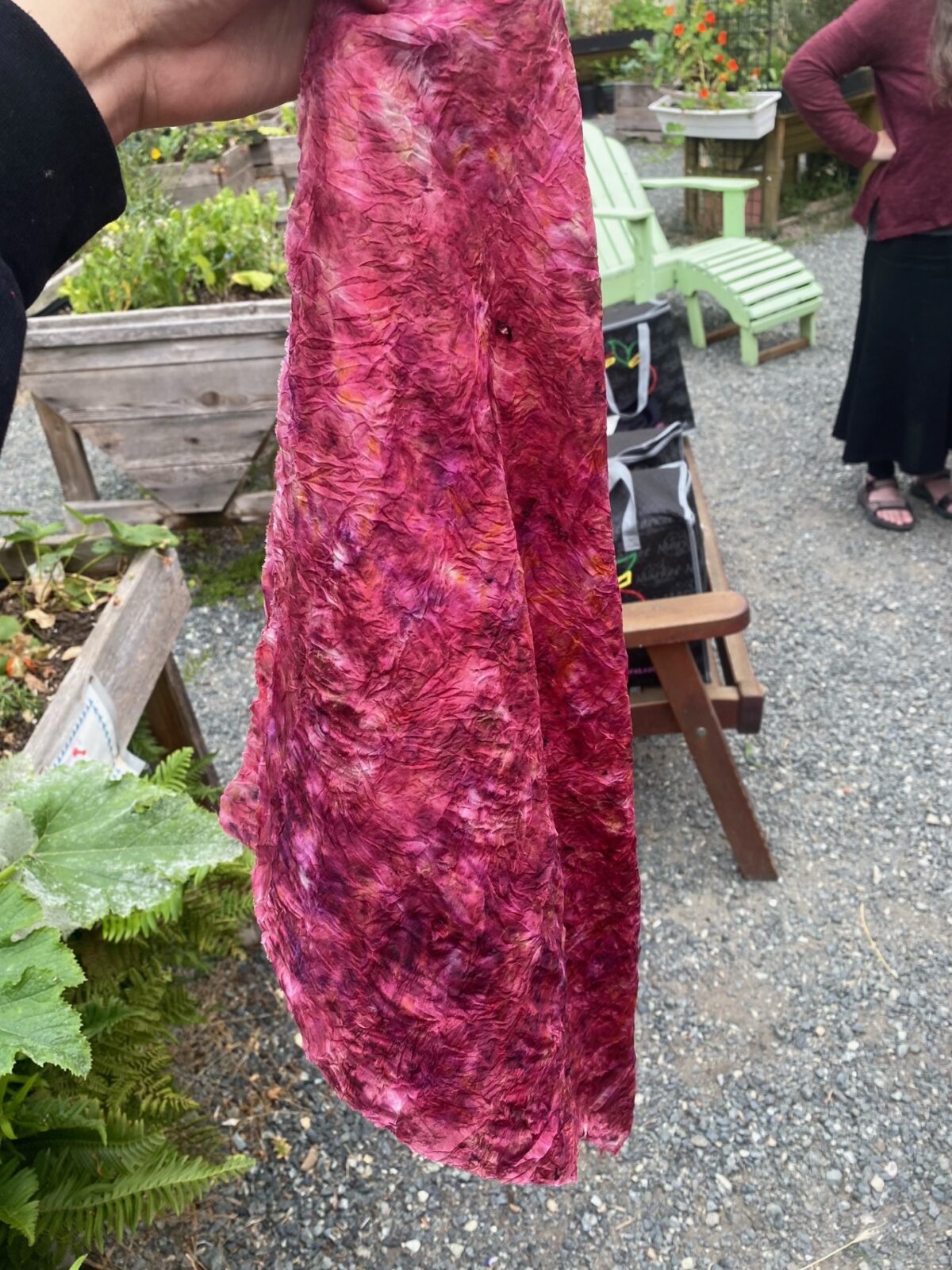
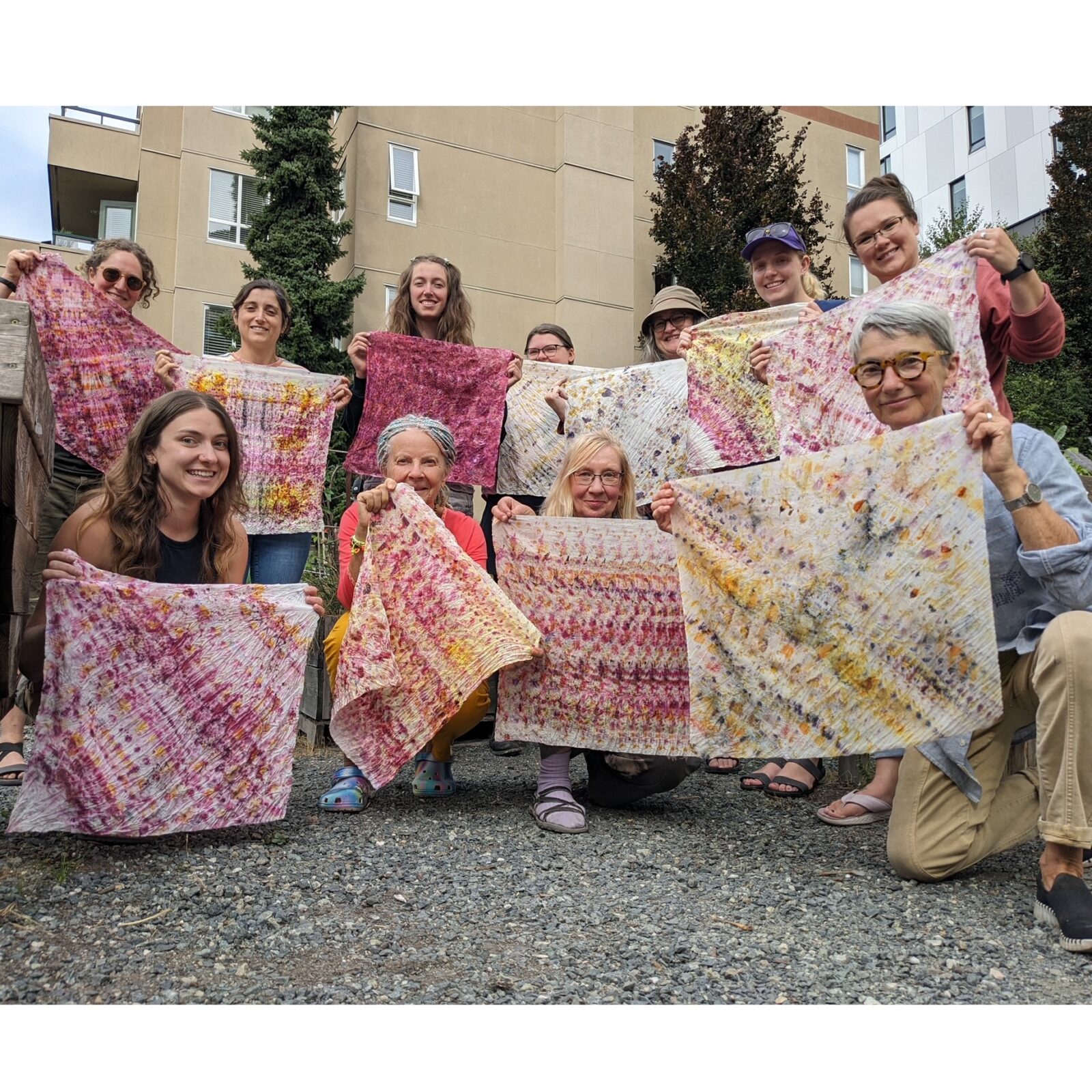
After learning a little bit about other natural dyeing strategies, we got into our bundle dyeing process to create bandanas. We had all sorts of natural materials to choose from for our dyes. We used flowers including mallow, scabiosa, hollyhock, pansies, cosmos, zinnia, and more. We also used kitchen scraps including onion skins, turmeric, hibiscus coffee, cabbage, and berries.

I ended up using a lot of flowers, but I was really excited about the potential of dyeing using food scraps with high school students as it ties into our chats about compost and redefining what we consider waste so perfectly. And as a bonus? Food waste is a material that is so easy to access.

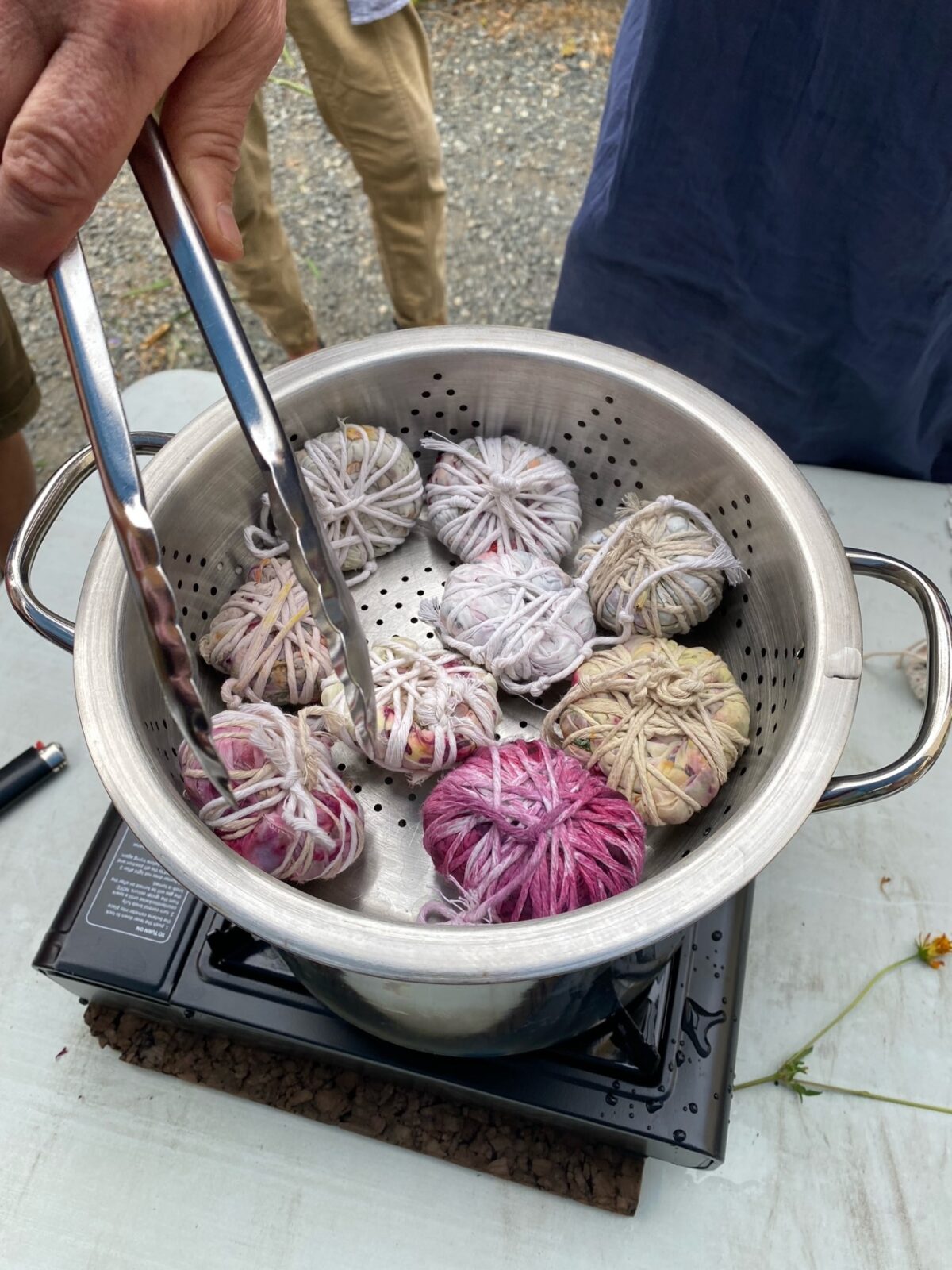
The bundle dyeing process itself is simple. It involves laying down all your materials on the bandana, and then rolling it up tightly in the way you’d roll a rug. If you fold it in half first, either rectangular or corner to corner you get a sort of mirror effect in the way the colour comes out (which is cool!). After that, you roll up your fabric into a spiral and tied tightly. The last step is steaming the piece the same way you’d steam a vegetable in the kitchen. We steamed our bandanas for about 30 minutes – you can see the results in the photos!

Interested in chatting with Elora about running a workshop with a group of students? Check out our offerings here.

This was such a fun way to engage with plants (that you can find in gardens, along boulevards, in sidewalk cracks, and other urban areas) as well as food scraps in a new way.

It can be difficult to find the time to pursue professional development and skill-building while also working as an educator with a busy teaching schedule. I was grateful to the Compost Ed Centre for making it possible, and I’m looking forward to integrating what I’ve learned into my teaching.

Thank you to the Yates Street Community Garden and Angie for hosting!

Support us by becoming a monthly donor today!

By Elora Adamson, Child & Youth Education Coordinator

Posted in Blog, News, Reflections, SustainabilityTagged , , , , ,

Victoria’s Vital Signs Report

October 12, 2023


Vital signs is a check-up that measures vitality of a region, identifies concerns, and supports action on issues that are important for our quality of life. Each year the Victoria Foundation shares this check-up in a report. This year, the Compost Education Centre is featured in the Environmental Sustainability section.

Read the report


Posted in Announcement, Annual Report, Blog, News, SustainabilityTagged ,