GET INVOLVED

Book a Child & Youth Workshop

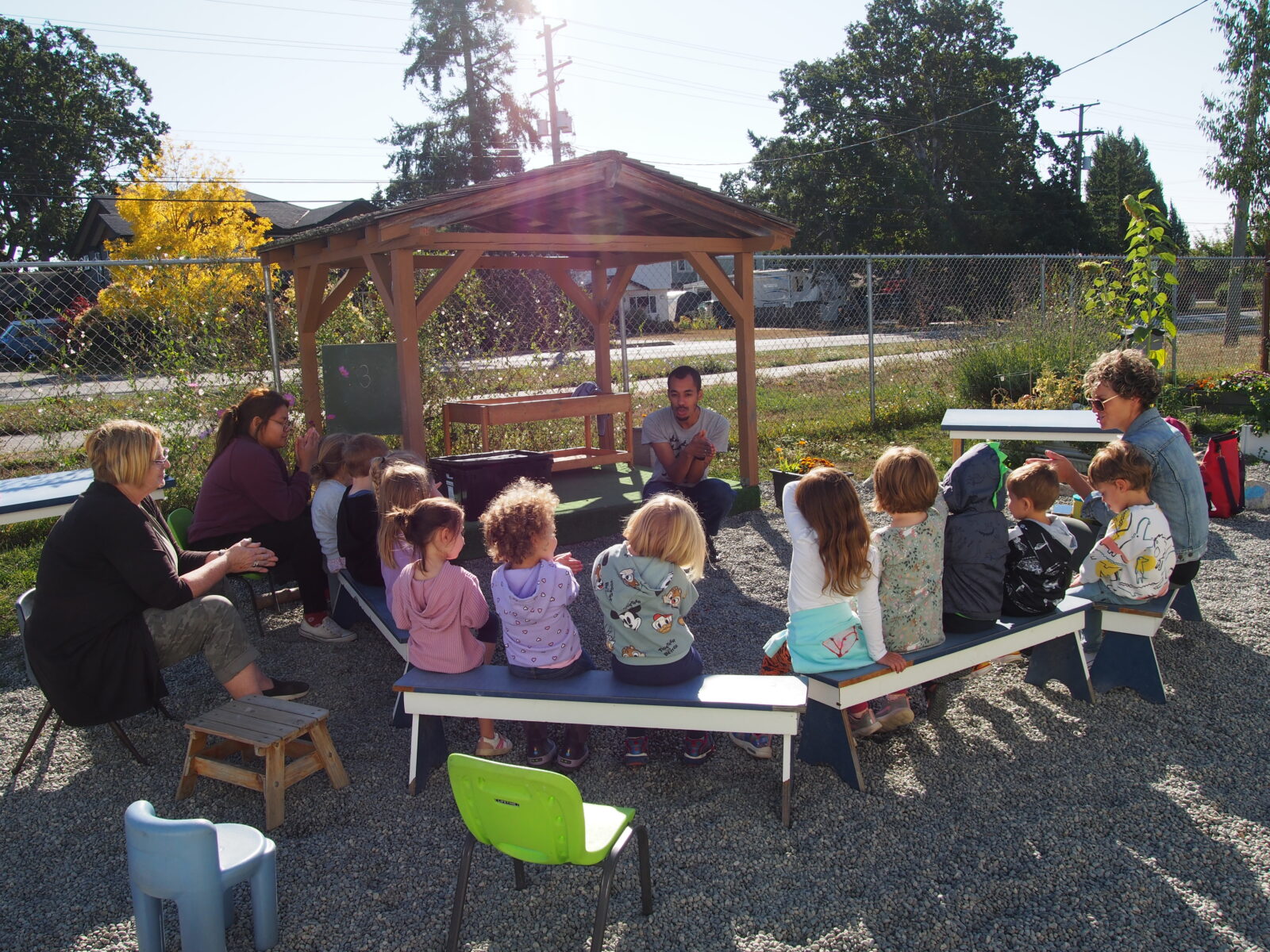
Book a child and youth workshop in your classroom, or come visit our teaching gardens! We offer a variety of programming for learners from preschool to grade 12. Inquire about the possibility of French composting workshops for immersion classes from kindergarten to grade 8!

Accessibility Information

Our educators aim to make our workshops accessible and enjoyable for students with diverse needs. Get in touch if you have students who may benefit from accommodations so that we can best prepare for your workshop. For information about accessibility on our site during visits, see here.

Testimonials

“It was very apparent that the kids and their parents thoroughly enjoyed the program. The day after the program I had one little guy, who attended the program, ask me to find him books on composting as his family were going to build a compost!”

“I liked how experiential the tour was for the children. The facilitator was skilled at maintaining the children’s attention and keeping them interested.”

“Elora was very interactive, engaging, and fun! She noticed when the children needed to move and was willing to respond to many questions, comments, and student inquiries!”

  • Spring Plant Sale – May 9th, 2026

    Save the Date! The Spring plant sale will be held on May 9th, 2026 from 10am-2pm. The plant sale will take place in Haegert Park (1202 Yukon St.) one block from our site on North Park street. Bring a blanket or a picnic so you can enjoy the music in the shade of the giant…

    Save the Date! The Spring plant sale will be held on May 9th, 2026 from 10am-2pm. The plant sale will take place in Haegert Park (1202 Yukon St.) one block from our site on North Park street. Bring a blanket or a picnic so you can enjoy the music in the shade of the giant Sequoia tree. Entry by donation. No one turned away from lack of funds. Dogs welcome.

    The Spring Organic Plant Sale features local farmers offering a wide variety of organically grown vegetable, flower and herb seedlings to get you off to a successful start this growing season.

    What you can look forward to:

    • The largest selection of organically grown heirloom tomato varieties all in one place for easy shopping

    • Organically grown vegetable starts from arugula to zucchini

    • Native plants for your low maintenance garden

    • Perennial edibles like berry bushes and other fruiting shrubs

    • Medicinal herbs like English lavender, chamomile and yarrow

    • Culinary herbs like Genovese basil, dill and chives

    • Companion plants like marigolds, sweet cicely and comfrey

    Accessibility Information

    The sale will be happening in Haegert park which is grassy and slightly sloped, there are curb cuts at various entrance points to get into the park.

    Visitors can park at the Vic High parking lot between Gladstone Avenue and Grant St. The parking lot is a 200m walk from Haegert Park.

    Thank you to our sponsors:

    • Hatchet & Seed
    • LADR Landscape Architects
    • Biophilia Collective
    • Country Grocer
    • Cold Comfort
    • Habit Coffee
    • Patagonia Victoria
    • The Private Network
    • Zero Waste Emporium
    • Chek News
    • West Coast Seeds

    The Compost Education Centre is located on unceded and occupied Indigenous territories, specifically the land of the Lekwungen speaking people—the Xwsepsum and Songhees Nations. These nations are two of many, made up of individuals who have lived within the porous boundaries of what is considered Coast Salish, Nuu-Chah-Nulth and Kwakwa’wakw Territory (Vancouver Island) since time immemorial. At the CEC we seek to respect, honour and continually grow our own understandings of Indigenous rights and history, and to fulfill our responsibilities as settlers, who live and work directly with the land and its complex, vital ecologies and our diverse, evolving communities.

  • Join us for Rainy Days on Sat April 12th!

    If the rainy days of early spring are getting you down, try thinking about rainwater as your friend and ally in the garden! In Victoria, we receive an average of 2 feet of rainfall each year. Most of the rain that hits our properties and streets is flushed away through a complex stormwater collection infrastructure…

    Spring SLR-11

    If the rainy days of early spring are getting you down, try thinking about rainwater as your friend and ally in the garden! In Victoria, we receive an average of 2 feet of rainfall each year. Most of the rain that hits our properties and streets is flushed away through a complex stormwater collection infrastructure and pours into harbours, lakes and river systems, often taking harmful pollutants and heavy metals with it.  By collecting and storing rainwater in your property, you can help prevent these pollutants from entering our waterways and treat rainwater as the precious resource it is.

    Rainwater collected from a rooftop can be a high quality water source, as it contains none of the chlorine found in centralized water supplies and is the perfect temperature for plants, which makes it ideal for use in the garden.  Stored rainwater provides an ideal source of readily available water, particularly during long dry summers or in locations facing declining groundwater levels. Rain gardens, permeable paving, green roofs, rain barrels, cisterns and infiltration chambers are all examples of rainwater management methods. They can create natural, beautiful landscapes and public spaces.

    Join us in our fabulous demonstration gardens to learn more about rainwater harvesting systems and practices in your community. In partnership with the CRD, we’ll be bringing together community and municipal groups involved in rainwater management, as well as hosting two free workshops about stormwater education, rainwater harvesting, and choosing the right systems. You will be entered to win a free rain barrel too!

    Register for a FREE rainwater harvesting workshop here!

    Rainy Days has received generous support from RBC and is proudly supported by the CRD.

    Subsidized rain cisterns will be available on a first come first serve basis, with 10 of each size available for purchase. Limit one per household, payment options include credit card, debit, cash or cheque. Pick-up of the cisterns will be at Van Isle Water Systems with proof of purchase – 461 Dupplin Road, Victoria Store Hours: 7.30am-5.00pm Weekdays, 8.00am-Noon Saturdays.

    100 Gallon (455 Liters) Rain Barrel complete with easy to install Diverter System with Overflow and Drain Kit. Cost $202.92 Savings of over 60%!
    CYS_RKUT400 large cistern
    400 Gallon (1818 Liters) Slimline Rain Tank complete with All-in-One Downspout
    400 Gallon (1818 Liters) Slimline Rain Tank complete with All-in-One Downspout Diverter with 6’ of Flex Pipe and easy to install Overflow and Drain Kit / Cost $587.72. Savings of over 60%!


  • Thoughts on classroom worm bins

    The list to the left has been living on my bulletin board for a few months and seeing it makes me smile every day.  It’s from a student in a grade 3 class at St Patrick’s Elementary who was excited to help harvest his classroom worm compost bin but who wasn’t completely enthusiastic about touching…

    DSCN0007

    The list to the left has been living on my bulletin board for a few months and seeing it makes me smile every day.  It’s from a student in a grade 3 class at St Patrick’s Elementary who was excited to help harvest his classroom worm compost bin but who wasn’t completely enthusiastic about touching the worms and finished compost.  He put himself in charge of documenting all the organisms found in the worm bin and thoughtfully made me a copy of his list to take with me.

    There are lots of reasons I get nerdily excited about worm composting (such as the beautiful finished product and how little time it takes for the worms to make it), but the most compelling one has to be what a great experience a classroom worm bin is for kids.  It is a little ecosystem tucked away in the class, it lets kids see and participate in the entire compost cycle, and it gets them into the habit of integrating positive environmental change into their daily routine.  Plus, it gives them an excuse to dig around in the dirt!

  • New Greenhouse: Lessons, Budget, Design

    It’s a sad truth:  greenhouses don’t last forever.  At least not the common poly-and-PVC DIY kind.  Our plastic was tearing and I could stand the blaring red Tuck-Tape no longer, so it was time to tear down and build back up. My dream: to be able to enter and exit the greenhouse without bumping my…

    It’s a sad truth:  greenhouses don’t last forever.  At least not the common poly-and-PVC DIY kind.  Our plastic was tearing and I could stand the blaring red Tuck-Tape no longer, so it was time to tear down and build back up.

    My dream: to be able to enter and exit the greenhouse without bumping my forehead, spin around inside it with my arms spread wide, and have it be roomy enough to grow some blue-ribbon tomatoes and peppers.  That last one will likely remain a dream, but the other two were accomplished!

    I enlisted the expertise of Jesse Brown from Victoria Aquaponics to help me with the design and installation, as well as the muscles of a couple dear volunteers to help with the demolition of the old greenhouse.

    Vital stats:

    • Dimenions: 12’x12’x8′
    • Length of hoops: 22ft
    • Dimensions of plastic: 2 pieces at 12’x14′, 1 piece at 12’x16′
    • Time to raise the frame and put roof plastic on: 7 hours (1 day)
    • Time to wrap and tighten plastic on ends and roof: 4 hours
    • Cost of materials: ~$600 (I bought everything new, and we get a discount at Castle Building, so true cost may be slightly higher.  This could definitely be off-set by scavenging for used/free materials.  Try UsedVictoria or Craigslist).

    Here we go! (click the photos to enlarge)

    Ready to retire..
    Ready to retire..
    Louis Greenhouse
    Rock star volunteer Louis taking a break from pulling the dreaded rebar out of the ground.
    Greenhouse door down 1
    Timberrrr!
    Greenhouse door down 4
    Bam!
    Greenhouse down1
    Greenhouse down…
    Got ‘er level!
    New hoops raise the height of the new greenhouse to 8 ft…and save me from so much forehead-banging.
    rebar
    Rebar pounded 2′ into the ground, secured to base with metal strapping. PVC slides over rebar, secured to frame with clamp and screws. Hoops were placed every 3 feet.
    angle cut Jess
    Jess takes care of the angle cuts for the end frames, only 4 total for the whole greenhouse!
    plastic on
    Ends framed, plastic on.
    thumb's up
    My thoughts at the end of the day.
    Plastic-wrapping the ends…
    Definitely a two-person job!
    Definitely a two-person job!
    Finished greenhouse
    Side-support hoops a la Mason Street City Farm!
    corner secure
    Side-support hoops (on the left) are secured in the corners with metal strapping and screws…
    zap straps
    …and secured to each cross-hoop with an X of zap straps.
    door
    The door. Note placement of hinges!
    DSCN0011
    Aaaand fin!  It’s raining…but we’re DRY! What the greenhouse is truly meant for: sipping coffees and looking good.

    What I learned:

    Ask for help!  Wrapping the greenhouse in plastic and then tightening is something that can be done by one person, but you will never want to build another greenhouse again and your plastic will likely end up with holes/mis-cuts in it (either from you making a mistake or literally just loosing it and taking the scissors to it to release some frustration).  I could not have done this project as fast or with as much enjoyment without the help of Jess of Victoria Aquaponics, the always friendly and knowledgeable folks at Cook St. Castle and Louis, one of our long-standing (long-suffering?) volunteers.

    Spray-paint the PVC before installing.  The PVC and the plastic react with each other in sunlight, making the plastic break down and split over time (note where the red Tuck-Tape is in the first picture). Having a protective layer between the plastic and the PVC extends the life of your plastic.

    PVC stands for polyvinyl chloride.”Poly” refers to the polyethylene plastic you will cover your greenhouse in.  There are lots of different kinds of poly.  You want 6mm with a UV barrier, possibly a condensation barrier too.  Integrity Sales stocks this and sells it by the square foot.  BW Greenhouse in Abbostford has the UV + condensation barrier kind.

    Always check that things are level, measure twice and take your time!

    Open source

    I wanted this to be a free and easily accessible project.  So: a rough budget for this greenhouse is below, you can click on the photos above to enlarge them and get a better view of how it’s put together and you can call the Centre if anything is unclear.  May the future bring you many, many completely ripe tomatoes! 

  • Earth Repair: An Introduction to Bioremediation on March 29th

    We are excited to announce a full day bioremediation course taught by Leila Darwish, the author of Earth Repair and a general grassroots bioremediation all-star! Join us on Saturday March 29th from 10:00am to 3:00 pm for this informational and inspiring event.

    We are excited to announce a full day bioremediation course taught by Leila Darwish, the author of Earth Repair and a general grassroots bioremediation all-star! Join us on Saturday March 29th from 10:00am to 3:00 pm for this informational and inspiring event.

    (more…)